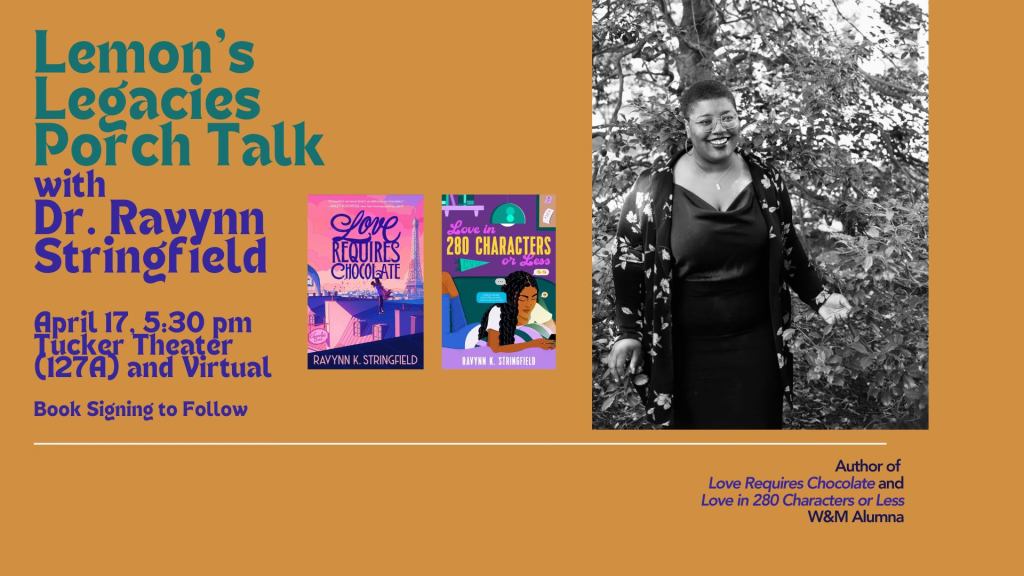
Lemon Project’s Legacies Porch Talk features author and W&M alum Dr. Ravynn Stringfield
Join the Lemon Project on Thursday, April 17 at 5:30 pm ET for the next Lemon’s Legacies Porch Talk as author and W&M alum Dr. Ravynn Stringfield joins us to celebrate the launch of her new book, Love in 280 Characters or Less. Ravynn will read a selection from her work and then take part in a conversation. After the Porch Talk, come to Tucker Lobby to purchase Ravynn’s books. Ravynn will also be signing books in the foyer. Read more about Ravynn and register at https://events.wm.edu/event/view/lemonproject/363093 Dr. Ravynn K. Stringfield is an author, editor and artist based in Virginia. She served as a Lemon Project grad assistant during her time at William & Mary! Ravynn’s debut young adult novel LOVE REQUIRES CHOCOLATE was published by Joy Revolution on August 20, 2024. Her second young adult novel, LOVE IN 280 CHARACTERS OR LESS, from Feiwel & Friends, will release on April 15, 2025. Her book length fiction is represented by Leah Pierre of Ladderbird Agency. #thelemonproject#williamandmary#wmalumi#booktalk
RICHMOND – The Department of Historic Resources (DHR) has announced nine new historical markers coming to roadsides in Virginia. The markers will recall various topics in the Commonwealth’s history, including an important Native American trade route that was later used during military campaigns in the American Revolution and the Civil War; a 20th-century performing arts theatre in Norfolk’s Black business district that was dubbed the “Apollo of the South”; and the Rev. Dr. Martin Luther King, Jr.’s visits to communities in southern Virginia in the early 1960s, right before the height of the Civil Rights Movement.
The Virginia Board of Historic Resources approved the markers on March 20, 2025, during its quarterly meeting in Richmond hosted by DHR.
While it was formally established in 1866, the origins of First Baptist Church Bermuda Hundred in present-day Chesterfield County date to 1850. The church is located at a former central marketplace of the colonial period known as Bermuda Hundred, which became one of Virginia’s official trade ports in 1691. Transatlantic slave ships brought thousands of enslaved Africans to Bermuda Hundred to be sold. After circa 1750, when the demand for laborers increased in the newly settled southern Piedmont region of Virginia, Bermuda Hundred became one of the Commonwealth’s largest slave auction sites. Most enslaved Africans who disembarked in Bermuda Hundred, including many children, were sent to tobacco plantations, where planters profited from their labor. The Rev. Curtis W. Harris, a Civil Rights leader, became pastor of First Baptist Church Bermuda Hundred in 1959.
Two new markers highlight events that took place in Virginia during the nation’s Revolutionary and Early Republic eras:
The Old Carolina Road in Loudoun County was a Native American trade route that extended across Virginia, linking the Potomac River with the Carolinas. By the mid-1750s, the Old Carolina Road had become an important southward migration route for European settlers, who crossed the Potomac at Noland’s Ferry. The general corridor of the road corresponds to modern U.S. Route 15, though—like many colonial roads—its path often shifted. During the Revolutionary War and Civil War, the road facilitated troop movements through Loudoun County. In May 1776, Thomas Jefferson traveled on the Old Carolina Road to get to Philadelphia, where he attended the Second Continental Congress and drafted the Declaration of Independence.
American explorers Meriwether Lewis and William Clark were friends of Botetourt County native William Preston, Jr., and spent time in the county. Clark met his future wife, Julia Hancock, of Santillane, during a visit in the early 1800s. After their expedition to the Pacific Ocean from 1803 to 1806, Lewis and a group of Mandan Indians passed through Botetourt County on their way to Washington, D.C., and Clark was given a congratulatory address from citizens in the Town of Fincastle. Clark was in Botetourt County when he received his commission as a brigadier general of militia for the Louisiana Territory in 1807. He also got married in the county the following year. In 1810, the writer and future financier Nicholas Biddle met with Clark in Fincastle before editing the official narrative of the expedition.
The centrality of the Black church in Black communities of Virginia is exemplified in one new marker:
Dedicated on April 18, 1875, Moore Street Missionary Baptist Church in the City of Richmond was established to serve the residents of an area within the Sheep Hill community, later known as Carver. The Rev. William Troy, a founder of the church and its first pastor, was a freeborn man of color from Virginia. Troy became a resident of Canada before the Civil War and was a prominent abolitionist associated with the Underground Railroad. The Moore Street Industrial Institution, a school for Black students, was located on the church’s property. The acclaimed educator Virginia E. Randolph (1870-1958), who was known for her work with Henrico County’s public schools, was a member of the church. The congregation moved to its current location in Richmond in 1908.
Three approved markers focus on political and cultural events that encouraged Black people to embrace their African and African American heritage against Jim Crow and discrimination in early-20th-century Virginia:
In 1914, Marcus Garvey founded the Universal Negro Improvement Association (UNIA), an organization that promoted Pan-Africanism, Black economic independence, and racial pride and separatism. In 1918, the UNIA’s sixth division, or branch, was established in the City of Newport News. The UNIA eventually expanded to hundreds of divisions internationally. The branch in Newport News, where Garvey’s message resonated with maritime and industrial laborers, was among the largest divisions. Garvey spoke at the Dixie Theatre and at First Baptist Church in the city in 1919 to raise funds for the UNIA’s steamship company, the Black Star Line. Audience members were among the earliest and most enthusiastic investors. The UNIA was in decline by the 1930s.
Nicknamed the “Apollo of the South,” the Attucks Theatre was built in 1919 in the City of Norfolk’s thriving Black business district. Designed by Black architect Harvey Johnson, the Attucks Theatre was financed, constructed, and operated by African Americans. It was named for Crispus Attucks, who was regarded as the first casualty of the American Revolution. Known as the Booker T. from 1934 until it closed in 1955, the theatre was a venue for concerts, movies, plays, and community events, and was listed in the Green Book, a 20th-century guide for Black travelers. Artists who performed at the theatre included Ruth Brown, Ella Fitzgerald, and Dizzy Gillespie. The theatre’s rooms upstairs served as offices for Black professionals. Attucks reopened in 2004 after renovations.
On October 24, 1925, Upsilon Omega became Richmond’s first chapter of Alpha Kappa Alpha (AKA) Sorority, Inc., the first Greek-letter organization founded by Black women. Aligning with the sorority’s principles of scholarship, leadership, and service, this graduate chapter focused on supporting students in public schools. The chapter’s inaugural president was Dr. Zenobia Gilpin, a Black female physician during Virginia’s Jim Crow era who organized clinics in Black churches that were emulated elsewhere and who overcame racial inequities in the healthcare industry. Members of the chapter also included Janet Ballard, international president of AKA, and Dr. Grace Pleasants, the first Black national program director of the Girl Scouts of the USA. The chapter began to meet at Fifth Baptist Church in the 1980s.
The Board also approved two markers that recall the Civil Rights Movement in Virginia in the 1950s and ‘60s:
In Lancaster County, Brookvale High School opened to serve Black students in 1959, five years following the U.S. Supreme Court’s decision in Brown v. Board of Education declaring public school segregation unconstitutional. Brookvale replaced A. T. Wright High School, and the Crusaders Political and Social Club, a civil rights organization, met in the school building frequently. In 1969, the Brookvale Warriors won the last state baseball championship overseen by the Virginia Interscholastic Association, the league for Black schools. The county fully desegregated its schools in the fall of 1969. After that, the Brookvale building became an intermediate school. Brookvale’s last principal, Dr. Elton Smith, later became Virginia’s first Black public school superintendent.
On March 28, 1962, during a “People to People” tour of communities in southern Virginia, the Rev. Dr. Martin Luther King, Jr., spoke at Mount Level Baptist Church in Dinwiddie County. King and other officials of the Southern Christian Leadership Conference also made stops between Hopewell and Lynchburg, where they addressed crowds and went door-to-door to encourage voter registration and to recruit civil rights workers. King’s visit to Mount Level was planned by his chief of staff, the Rev. Wyatt Tee Walker, who was a former pastor of the church. At Mount Level, King spoke to a full house of people about the importance of voting as a pathway to equality and justice for all. He also visited Dinwiddie County’s Rocky Branch community.
Following the Board of Historic Resources’ approval of the markers, it can take upwards of six months or more before a new marker is ready for installation. The marker’s sponsor covers the required $3,000 manufacturing expenses for a new sign.
Virginia’s historical highway marker program began in 1927 with installation of the first markers along U.S. Route 1. It is considered the oldest such program in the nation. Currently there are more than 2,600 state markers, mostly maintained by the Virginia Department of Transportation, except in those localities outside of VDOT’s authority.
Full Text of Markers:
(VDOT must approve the proposed location for each sign in its right-of-way; local public works departments must do so in jurisdictions outside VDOT’s authority.)
First Baptist Church Bermuda Hundred
First Baptist Church Bermuda Hundred traces its origins to 1850 and was formally organized ca. 1866. The Rev. Curtis W. Harris, a Civil Rights leader, became pastor here in 1959. The church stands on the former central marketplace of Bermuda Hundred, which became one of Virginia’s official ports in 1691. Transatlantic slave ships brought thousands of enslaved Africans here to be sold. When demand for labor surged in the newly settled southern Piedmont after about 1750, this became one of Virginia’s largest slave auction sites. Most enslaved Africans who disembarked here, including many children, were marched to tobacco plantations in the interior, where planters profited from their labor. Sponsor: Chesterfield Historical Society of Virginia Locality: Chesterfield County Proposed Location: 4601 Bermuda Hundred Road
Old Carolina Road A Native American trade route that traversed Virginia, linking the Potomac River with the Carolinas, passed by here. By the mid-1750s, this “Carolina Road” had become an important southward migration route for settlers of European descent, who crossed the Potomac at Noland’s Ferry 3.5 miles northeast of here. Like many other colonial roads, its path often shifted, but its general corridor corresponds to modern US Route 15. During the Revolutionary War and Civil War, the Carolina Road facilitated troop movements through this area. In May 1776, Thomas Jefferson traveled this route to Philadelphia, where he attended the Second Continental Congress and drafted the Declaration of Independence. Sponsor: Lucketts Ruritan Club Locality: Loudoun County Proposed Location: Lucketts Community Center, Lucketts Road just east of US 15
Lewis and Clark in Botetourt County Meriwether Lewis and William Clark were friends of Botetourt Co. native William Preston Jr. and spent time here. On a visit early in the 1800s, Clark met his future wife, Julia Hancock, of Santillane. After the expedition to the Pacific Ocean (1803-06), Lewis and a group of Mandan Indians passed here on their way to Washington, D.C., and Clark received a congratulatory address from the citizens of Fincastle. Clark was here when he received his commission as brigadier general of militia for the Louisiana Territory in 1807 and was married here in 1808. Nicholas Biddle, a young writer and future financier, met with Clark in Fincastle in 1810 before editing the official narrative of the expedition. Sponsor: Virginia Lewis and Clark Legacy Trail Locality: Botetourt County Proposed Location: TBD
Moore Street Missionary Baptist Church Moore Street Missionary Baptist Church, originally several blocks east of here, was dedicated on 18 April 1875 to serve an area of the Sheep Hill community later known as Carver. The Rev. William Troy, a founder of the church and its first pastor, was a freeborn man of color from Virginia who, as a resident of Canada before the Civil War, had become a prominent abolitionist associated with the Underground Railroad. On the church’s property stood the Moore Street Industrial Institution, a school for Black students. Church member Virginia E. Randolph (1870-1958) became widely known as an educational innovator through her work in Henrico County’s schools. The congregation moved here in 1908. Sponsor: Moore Street Missionary Baptist Church Locality: City of Richmond Proposed Location: 1408 W. Leigh Street
The Garvey Movement in Newport News Marcus Garvey founded the Universal Negro Improvement Association (UNIA) in 1914 and launched its sixth division, or branch, in Newport News in 1918. The UNIA, which expanded to hundreds of divisions internationally, promoted Pan-Africanism, Black economic independence, and racial pride and separatism. The branch in Newport News, where Garvey’s message resonated with maritime and industrial laborers, was among the largest. Garvey spoke near here at the Dixie Theatre and at First Baptist Church in Newport News in 1919 to raise funds for the UNIA’s Black Star Line, a steamship company. Audience members were among the earliest and most enthusiastic investors. The UNIA was in decline by the 1930s. Sponsor: City of Newport News Locality: City of Newport News Proposed Location: Intersection of 23rd Street and Jefferson Avenue
Attucks Theatre The Attucks Theatre, known as the “Apollo of the South,” was built in 1919 in Norfolk’s thriving Black business district. It was financed, constructed, and operated by African Americans and was designed by Black architect Harvey Johnson. Named for Crispus Attucks, regarded as the first casualty of the American Revolution, the theatre was a venue for concerts, movies, plays, and community events. Performers here included Ruth Brown, Ella Fitzgerald, and Dizzy Gillespie. Rooms upstairs served as offices for Black professionals. The theatre, known as the Booker T. from 1934 until it closed in 1955, was listed in the Green Book, a guide for Black travelers. It reopened in 2004 after renovations. Sponsor: City of Norfolk Locality: City of Norfolk Proposed Location: 1010 Church Street
AKA Upsilon Omega On 24 Oct. 1925, Upsilon Omega became Richmond’s first chapter of Alpha Kappa Alpha Sorority, Inc., the first Greek-letter organization founded by Black women. This graduate chapter, following the sorority’s principles of scholarship, leadership, and service, focused on supporting students in public schools. Inaugural chapter president Dr. Zenobia Gilpin battled racial inequities in health care and organized clinics in Black churches that were emulated elsewhere. Other members included Janet Ballard, international president of AKA, and Dr. Grace Pleasants, the first Black national program director of the Girl Scouts of the USA. The chapter began meeting at Fifth Baptist Church in the 1980s. Sponsor: Alpha Kappa Alpha Sorority, Inc., Upsilon Omega Chapter Locality: City of Richmond Proposed Location: 1415 W. Cary Street
Brookvale High School Lancaster Co. opened Brookvale High School to serve Black students in 1959, five years after the U.S. Supreme Court declared public school segregation unconstitutional. The building replaced the old A. T. Wright High School. The Crusaders Political and Social Club, a civil rights organization, met here frequently. In 1969 the Brookvale Warriors won the last state baseball championship overseen by the Virginia Interscholastic Association, the league for Black schools. Lancaster Co. fully desegregated its schools in the fall of 1969, and the Brookvale building became an intermediate school. Brookvale’s last principal, Dr. Elton Smith, later became the first Black public school superintendent in VA. Sponsor: Save Brookvale History Locality: Lancaster County Proposed Location: 36 Primary School Circle
Dr. King at Mount Level Baptist Church The Rev. Dr. Martin Luther King Jr. spoke at Mount Level Baptist Church on 28 March 1962 during a “People to People” tour of communities in southern Virginia. King and other officials of the Southern Christian Leadership Conference made stops between Hopewell and Lynchburg, addressing crowds and going door-to-door to encourage voter registration and to recruit civil rights workers. The Rev. Wyatt Tee Walker, King’s chief of staff and a former pastor of Mount Level, planned the visit to this church, where King spoke to a full house about the importance of voting as a pathway to equality and justice for all. King also made a stop in the Rocky Branch community of Dinwiddie County. Sponsor: Dinwiddie County Locality: Dinwiddie County Proposed Location: 14920 Courthouse Road
Contact: Ivy Tan Department of Historic Resources Marketing & Communications Manager ivy.tan@dhr.virginia.gov 804-482-6445
RICHMOND — Minutes before Kendrick Lamar’s halftime performance at February’s Super Bowl LXI game, several people gave an impromptu dance show of their own at a suburban home near Richmond, Virginia.
Onlookers were surprised when the dancers of various ages did not perform the Cha Cha Slide, Cupid Shuffle or the Wobble — popular line dances that have prevailed at many Black social gatherings for the past three decades or more.
Instead, the dancers, holding colorful hand fans, debuted a new line dance to “Boots on the Ground (Where Them Fans At),” a gritty Southern song with a catchy beat. The fans’ rhythmic “clack, clack, clack” after each break or dance sequence produced squeals of joy from everyone in the room.
Thanks to social media, the song and dance with a “wrist” have gone viral. Both have been played and performed nonstop since the song dropped in December 2024. Artist 803Fresh, aka Douglas Furtick, of Wagener, South Carolina, wrote and recorded the song. Jaterrious Trésean Little, aka TrèLittle of Newnan, Georgia, is credited with creating the dance steps for the tune.
While still trying to process the wide support he’s attracted for “Boots on the Ground,” 803Fresh believes that its popularity is based on the song’s relatability factor.
The artist told WIS 10 (Columbia, S.C.) reporter Billie Jean Shaw last month that he wrote and recorded the song after attending a “trail ride,” a country party with Black culture influences. Trail rides can feature a horseback procession, zydeco, Southern soul, or hip-hop fusion music, along with dancing and feasting, according to various online sources. Attendees can number in the thousands, with many returning to the South for the gatherings from cities across the country, noted a “Black Women on Reddit” post.
Kemel Patton, Richmond’s “Line Dance King,” teaches the “Boots on the Ground” dance at the Pine Camp Arts and Community Center. Photo credit: Bonnie Newman Davis, NABJ Black News & Views
During his first trail ride, 803Fresh noticed that many attendees toted hand fans, but the fans were absent on his second trail ride. His observation led to “Boots on the Ground” and its subtitle, “Where Them Fans At.”
After listening to the song with the lyrics, it will probably come as no surprise that 803Fresh grew up hearing a combination of Southern soul and country often filled with bass guitar, drums, blues, and gospel.
“Get up by your seat (your seat), let your body move (move)
Cowboys and cowgirls are feeling that groove (feeling that groove)
Sippin’ on moonshine, fire barrel rollin’ (rollin’)
I’ma get behind that thing, girl, and hold it, hold, it, hold it, hold it
In addition to performing in the church, he enjoyed listening to blues and soul singers such as James Brown, Marvin Sease, Tyrone Davis, and Z.Z. Hill.
“It’s a beautiful marriage,” he said of his sounds and those of soul singers who dominated the charts from the 1960s until the mid-1970s. “I do my two steps and I’m done. It’s good times, fans, a lot of boots wearing and engaging with the crowd.”
Birth of a trend
Not long after hearing the song for the first time, Trè Little, 22, took the tune to another level, going beyond 803Fresh’s two steps to create a line dance for the song.
Trè Little created the “Boots on the Ground” line dance.
But the dance actually came by accident when Little, a dancer all his life, tripped over his feet on one of the turns, he said during a recent telephone interview.
“After I tripped over my feet, it was like that part had to go with the song,” Little recalled. “So I had to add that front step and turn into it. And that was really then I just started, like, just going with the flow. Everything just came together like a puzzle, basically.”
After Little recorded himself dancing to the song and posting it to social media, it generated 100,000 views overnight, he said. “Oh, my goodness! Yes! And then it just blew up from there.”
Once Little posted online tutorials demonstrating the dance, others in the line dance community joined in. He has since met 803Fresh and they plan to collaborate on more music and dance steps, he said.
“We talk here and there and whenever he has a band in Atlanta or somewhere in this area he calls and we get together,” Little said.
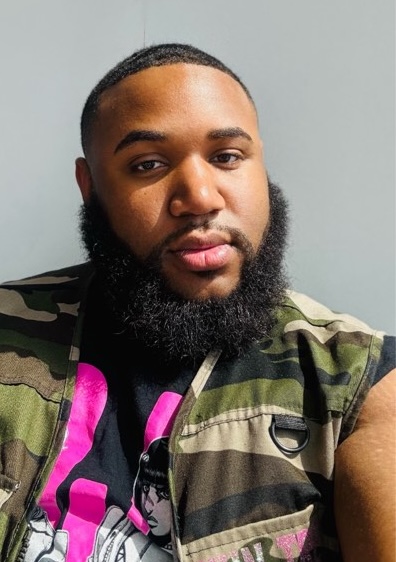
Kemel Patton, Richmond’s “Line Dance King,” with two of his “Boots on the Ground” students at the Pine Camp Arts and Community Center. Photo credit: Bonnie Newman Davis, NABJ Black News & Views
One community’s love affair with ‘Boots on the Ground’
Meanwhile, back in Richmond, a city that produced musical legends such as Jerome Brailey, D’Angelo, Stu Gardner, Mable Scott, Bill “Bojangles” Robinson, and Lonnie Liston Smith, fans continue to boogie to “Boots on the Ground.”
Options to feed their dance hunger appear unlimited because community centers, churches, restaurants, and other facilities routinely host line-dance classes or events throughout the city.
On a recent sunny Saturday, Christopher Woody, who once performed with the UniverSoul Circus, led his first line-dance event at the Satellite Club on Richmond’s Southside. The 3 p.m. to 7 p.m. event, organized just two weeks in advance, drew nearly 100 people. Many of the partiers who learned about the gathering on social media were Black women, dressed in Western wear and armed with colorful folding hand fans. (Fans range in cost, from $2.99 on Temu to $8.99 and up on Amazon.)
Woody, 40, a mental health technician, has been line dancing for 10 years. He decided to teach the dance at the suggestion of a friend.
Christopher Woody with a line dance ethusiast. Photo credit: Bonnie Newman Davis, NABJ Black News & Views
Teaching is different because everything’s at a faster pace when dancing, he said. “So, when you’re teaching, you have to slow it all the way down. Everything is step by step.”
Woody believes that part of the reason the line dance went viral so quickly is the current U.S. political stage, where uncertainty reigns.
“I think in a time like this, people want to get together and have, like, you know how the old cookout used to be?” he said. When you had people that got together to simply enjoy themselves, set aside their concerns for a while.”
Kemel Patton, affectionately known as the “Line Dance King” in Richmond, agrees. Patton, 63, a line dance instructor for three decades, has relied on dance to help minimize his battle with multiple sclerosis, a chronic, autoimmune disease that affects the central nervous system.
Through the years, Patton has seen as many as 350 people show up for his classes at various venues—from vacant food courts at dying malls to the Virginia Museum of Fine Arts’ marbled halls, as well as the Black History Museum and Cultural Center of Virginia.
Given his longevity in the line dance community, Patton sees the “Boots on the Ground” phenomenon as more than a “great hip-hop vibe with a country feel.”
Rather it also is “a song and dance that let’s folks know that our culture goes beyond just one type of music,” he said, adding, “that the root of all music started with us.”
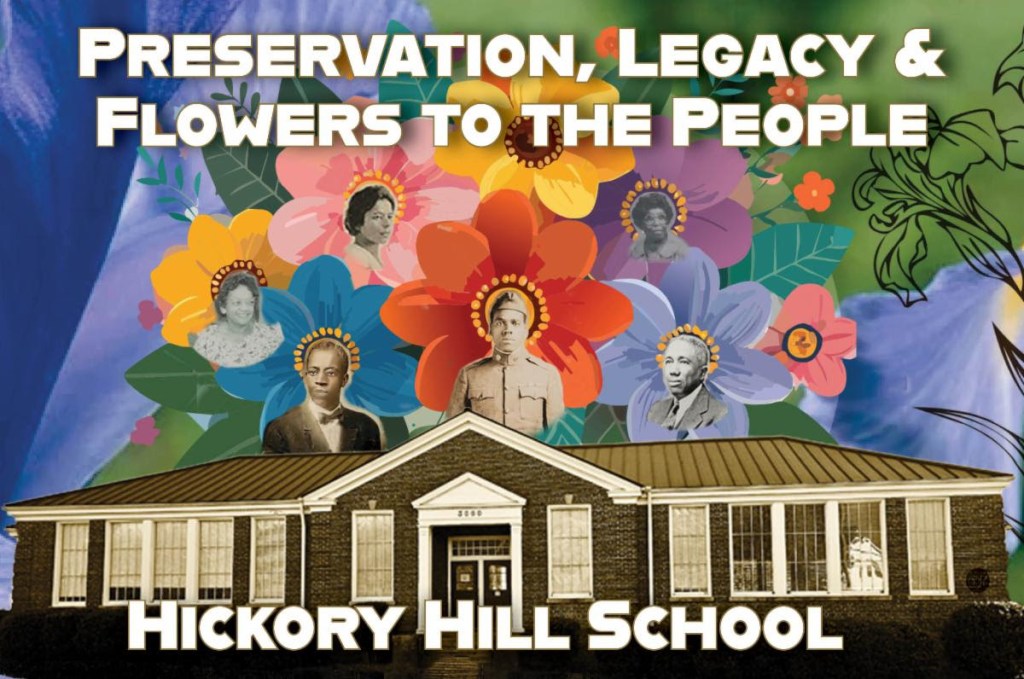
Join us to celebrate Hickory Hill School’s past, and reflect on what its legacy means today. Distinguished speakers include:
Danny Avula, City of Richmond Mayor.
Muriel Miller Branch, AAMD Pine Grove Project Manager.
Bonnie Newman Davis, Editor-at-Large, Charlottesville Tomorrow, CEO – BND Institute of Media and Culture Inc.
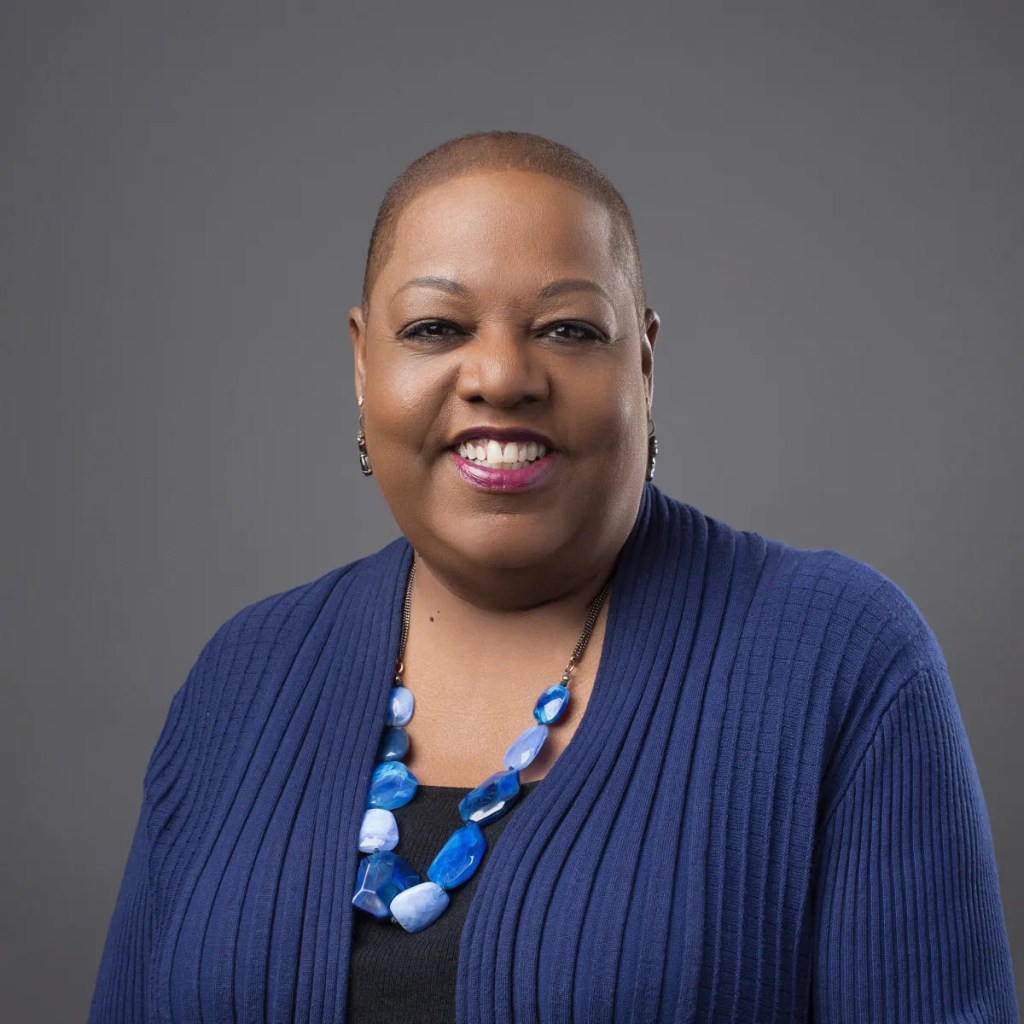
Dr. Colita Fairfax, former Chair of the Virginia Board of Historic Resources and Professor at the Ethelyn Strong School of Social Work.
Arthur Freeman, Jr.
Ghazala Hashmi, Virginia State Senator
Emmett Jafari, 8th District School Board Representative and more.
EVENT REGISTRATION is REQUIRED. There will be no onsite registration. Registration may include southern-style catering by IKaleLife and The Kitchen Magician ($25) or register without lunch (no charge). REGISTRATION WITH LUNCH $25
THE HISTORIC HICKORY HILL SCHOOL CELEBRATION IS OPEN TO THE PUBLIC. HOWEVER, ADVANCE REGISTRATION IS REQUIRED
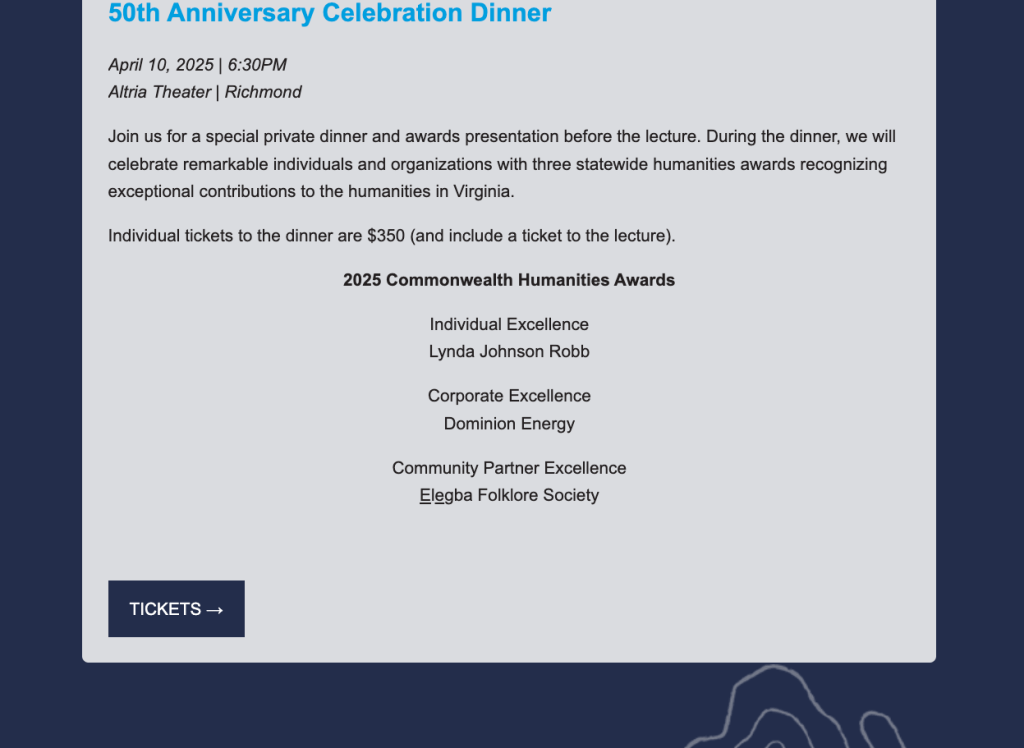
Lynda Johnson Robb, Dominion Energy and Elegba Folklore Society will be honored with “Commonwealth Humanities Award”
David BrooksBarbara Hamm
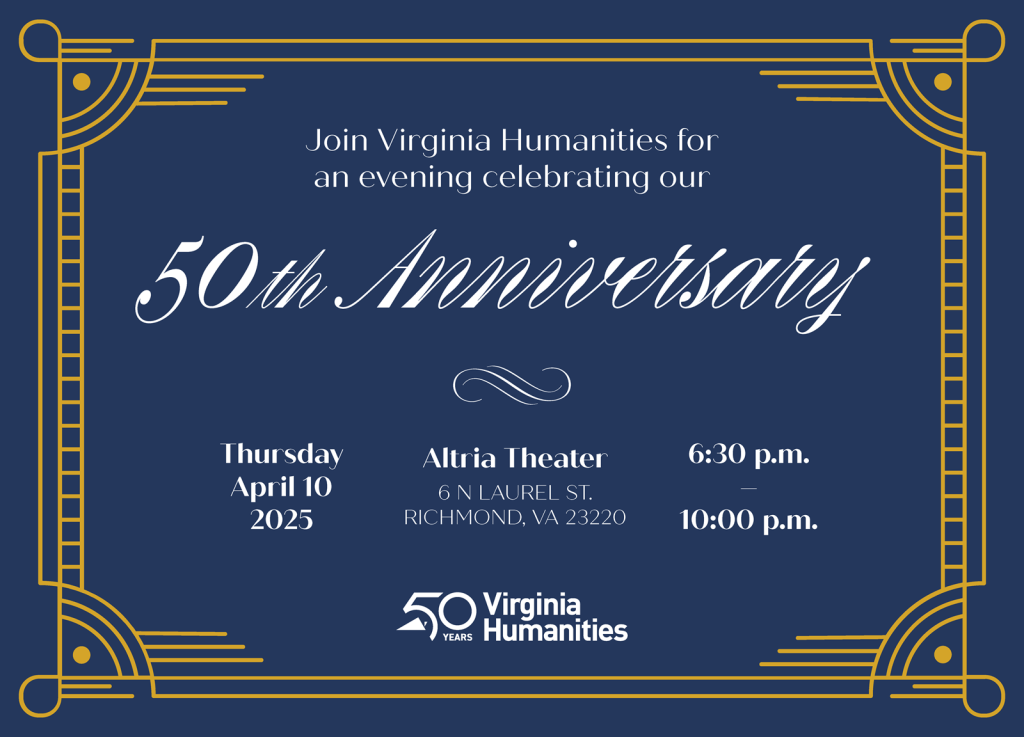
Virginia Humanities will host its inaugural Commonwealth Lecture in the Humanities at the Altria Theater in Richmond on April 10.
“Our celebration of 50 years as your state humanities council is continuing despite the challenges to our federal funding that are currently happening at the National Endowment for the Humanities,” reads a statement announcing the lecture.
“We have a lot to be proud of and to look forward to. We hope you’ll join us and gain a better understand why the humanities matter, how they help us understand our past and present and the role they can play in shaping a more positive future.”
Before the public lecture by David Brooks, three individuals/organizations will be honored with a “Commonwealth Humanities Award.” Lynda Johnson Robb, Dominion Energy, and Elegba Folklore Society will each be honored and will receive a unique work of art made by Page County basket maker, Clyde Jenkins.
About David Brooks:
David Brooks is one of the nation’s leading writers, authors and commentators. Brooks is an op-ed columnist for The New York Times, a writer for The Atlantic, and appears regularly on PBS Newshour. The lecture will examine the intersections of public life and culture, exploring how the humanities is relevant in today’s world, especially in a civically engaged society.
Following the lecture, there will be a moderated conversation by Barbara Hamm Lee. Barbara Hamm Lee is an award-winning journalist, radio and television host of Another View. Audience members will have the opportunity to submit questions in advance. The event is designed to foster deeper reflection on how the humanities are important to continue to shape our society.
The Commonwealth Lecture in the Humanities series is designed to foster deeper reflection on how the humanities continue to shape and respond to societal shifts. This is a signature event of Virginia Humanities’ year-long 50th anniversary celebration. The First Lady of Virginia, Suzanne S. Youngkin, is the honorary chair of the Commonwealth Lecture in the Humanities.
Monticello to Mark Jefferson’s 282nd Birthday, Award Thomas Jefferson Foundation Medal in Citizen Leadership During April 11 Ceremony on West Lawn, Wreath-Laying Ceremony on April 13
On Friday, April 11, the University of Virginia and Thomas Jefferson’s Monticello will present the Thomas Jefferson Foundation Medals as part of a series of events commemorating Jefferson’s birthday, known at UVA as Founder’s Day.
Monticello will mark the occasion with a ceremony on the iconic West Lawn at 10:00 a.m. The ceremony will be livestreamed for those unable to attend in person.
The keynote address will be given by Bryan Stevenson, the 2025 recipient of the Thomas Jefferson Foundation Medal in Citizen Leadership. Stevenson is a widely acclaimed public interest lawyer who has dedicated his career to helping the poor, the incarcerated, and the condemned. Stevenson is the author of the critically acclaimed New York Times bestseller “Just Mercy” and the subject of the Emmy Award-winning HBO documentary “True Justice.” He is the founder and executive director of the Equal Justice Initiative, a human rights organization in Montgomery, Alabama. Under his leadership, the initiative has won major legal challenges eliminating excessive and unfair sentencing, exonerating innocent death row prisoners, confronting abuse of the incarcerated and the mentally ill, and aiding children prosecuted as adults. Stevenson has won multiple cases at the U.S. Supreme Court, won numerous awards including the prestigious MacArthur Foundation “genius grant,” and has received over 50 honorary doctoral degrees.
During the ceremony, Monticello will also present the Thomas Jefferson Foundation Award in Citizen Service to Martize Tolbert on behalf of The Fountain Fund. Founded in 2017, the Fountain Fund provides low-interest loans and financial coaching, helping formerly incarcerated people build credit and achieve their self-determined goals. Ceremony attendees can also meet local organizations making a difference in the Community Partner Tent, located at the back of the West Lawn. The Partner Tent will open at 9:00 a.m.
This event is free and open to the public, but registration is required. Attendees may register at monticello.org/foundersday.
On Sunday, April 13, Monticello will mark Thomas Jefferson’s actual birthday with a wreath-laying ceremony at his gravesite at 1:00 p.m. The United States Army will place the presidential wreath, accompanied by performances from the U.S. Army Old Guard Fife & Drum Corps. This event is included with all same day admission.






 BND Institute of Media & Culture