Ayida, or Ayida Wedo, a loa or deity in Haitian Vodou that is the god for the earth and of the origins
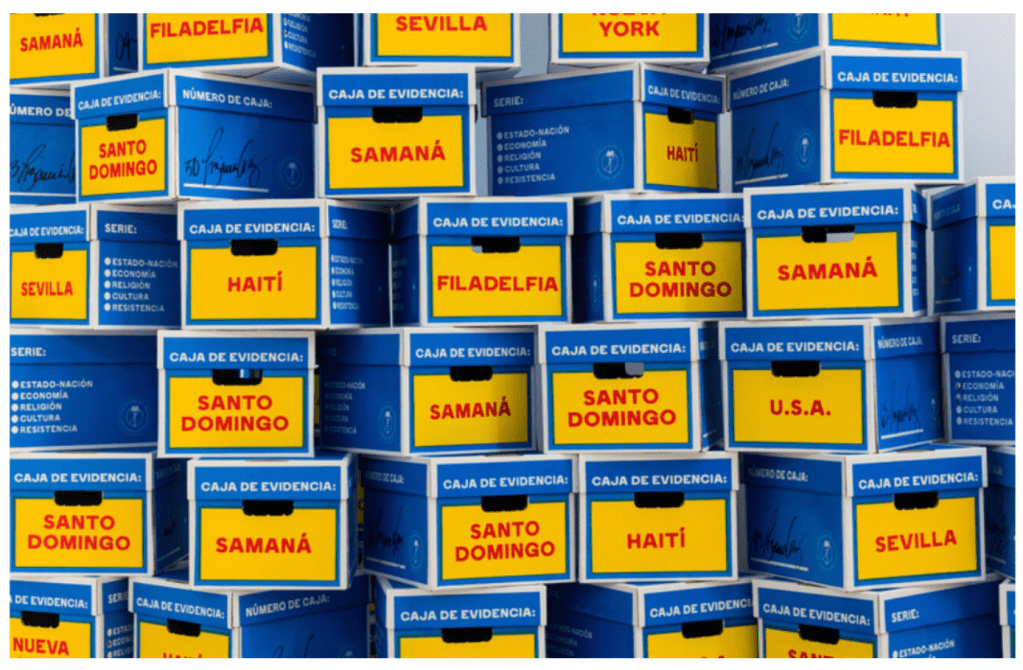
“Ayida” is a new group exhibition of five early- to mid-career artists celebrating the Caribbean and its diaspora. Through a combination of new and existing works, the contributors investigate and pay attention to the material, spiritual, and intellectual cultures of Haiti and the Dominican Republic, among other sites.
Ayida is curated by guest curator Serubiri Moses and coordinated by ICA Assistant Curator Egbert Vongmalaithong. The exhibition features works by Oletha DeVane, Thomas Allen Harris, Lizania Cruz, mujero, and Didier William.

Taking inspiration from Haitian poet and performer Assotto Saint (b. 1957 Haiti, d. 1994 New York), an important figure of the 1980s Black and gay writers movement, the exhibition considers Saint’s own complex relationship to Haitian Vodou, a topic frequently censored in Western societies. This impetus gives rise to Ayida’s focus on syncretism between religions and cultures, and on Afro-diaspora religions. The exhibition thus builds on dance and folklore research by the Dominican sociologist Fradique Lizardo (1930–1997) on El Gagá, a movement-based Vodou practiced in Haiti and the Dominican Republic.
The exhibition title refers to Ayida, or Ayida Wedo, a loa or deity in Haitian Vodou that is the god for the earth and of the origins and is often represented by a feminine figure or a snake (such as in the 1947 oil painting Damballah La Flambeau by the famous Haitian artist Hector Hyppolite). The preoccupation with nature among Ayida’s followers is evident in most of the contributors’ works, in addition to traces of Afro-diaspora religions, including Candomblé, Santería, and Vodou, among others.
Assotto Saint, the show’s main inspiration, was a poet who endeavored to archive the lives of his community of Black and gay writers in New York City through his work in publishing, editing, writing, and theater. Similarly, the exhibition’s contributors view their own artistic practices in documentary film, photography, installation, sculpture, and printmaking as a kind of archival and memory work. At the same time, they are also interested in textiles and other forms of craft that refer to the objects and material cultures of Black diaspora communities in the Caribbean and the United States.
Related Events
Ayida Gallery Talk with Curator Serubiri Moses
Friday, Jun 27
5:30 PM–6:30 PM
Friday, Jun 27
Through the Spectacles of Ethiopia: Garveyism and The Rise of Black Judaism
Wednesday, June 25, 2025 4:30 PM
Virginia Museum of History and Culture
The Black Judaic Heritage Center’s (BJHC) annual exhibition delves into the intersection of race and religion in early 20th-century America, and explores the influence of Garveyism on Black Jewish and Judaic movements in the Commonwealth through unique perspectives on spirituality and identity.
The exhibition highlights a unique perspective on religion and identity, and it seeks to document this historical context through video and photographs. The project addresses the need for a comprehensive understanding of the historical development of Black Judaic organizations in the U.S.- especially Virginia. The event sheds light on the impact of Garveyism in Jews of African affinity and contributes to preserving and interpreting American history and the broader historical community.
The project will include guest speakers (scholars and life-practitioners) who will guide the evening’s Learning Circles–in which the public will have an opportunity to engage in open discussions moderated by informed experts.
PLEASE REGISTER HERE

Owned and operated by th
 BND Institute of Media & Culture