Celebrating one of Richmond and Virginia’s Black history icons

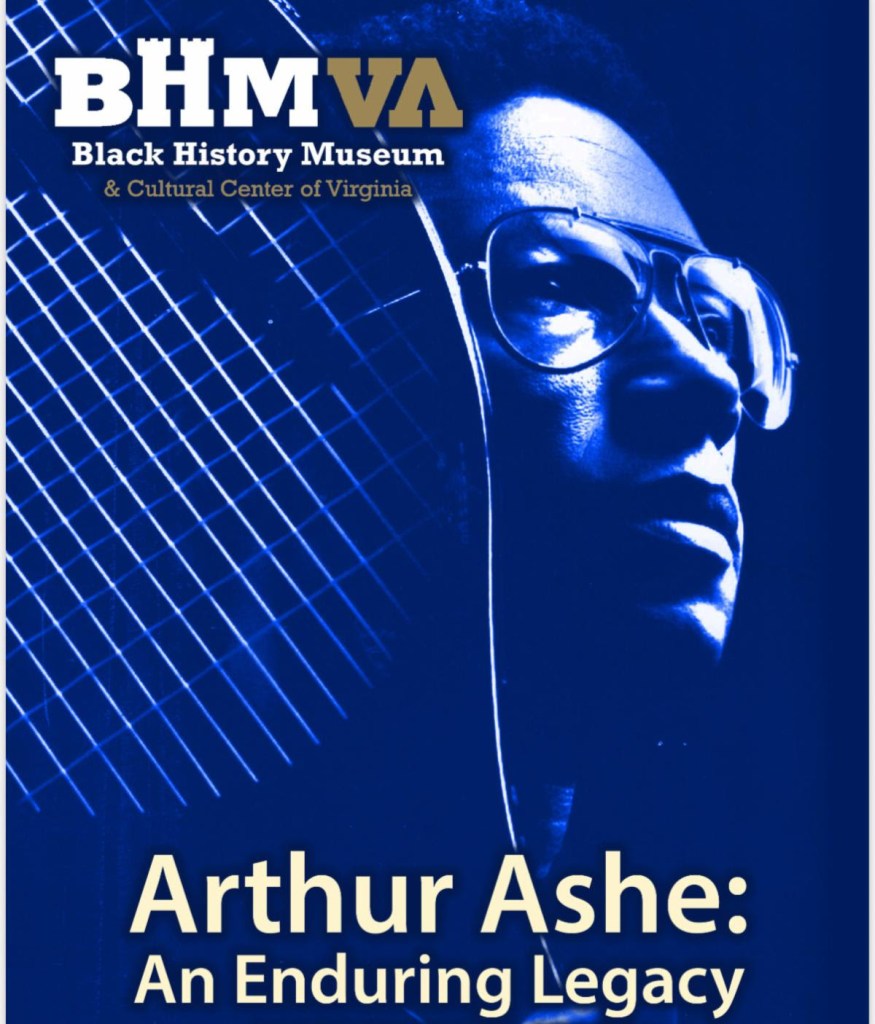
“Arthur Ashe: An Enduring Legacy” spotlights both Arthur Ashe’s early life in Richmond and his travels throughout Virginia, the U.S., and beyond that made him a true Citizen of the World.

Artifacts, images, and documents help tell the story of how Ashe’s accomplishments, both on and off the tennis courts, impacted our global community.

technology-based, immersive presentation of memorable moments in Ashe’s life, this exhibition will be presented through BHMVA’s partnership with UCLA, Ashe’s alma mater.

Tickets available here.

Also check out!

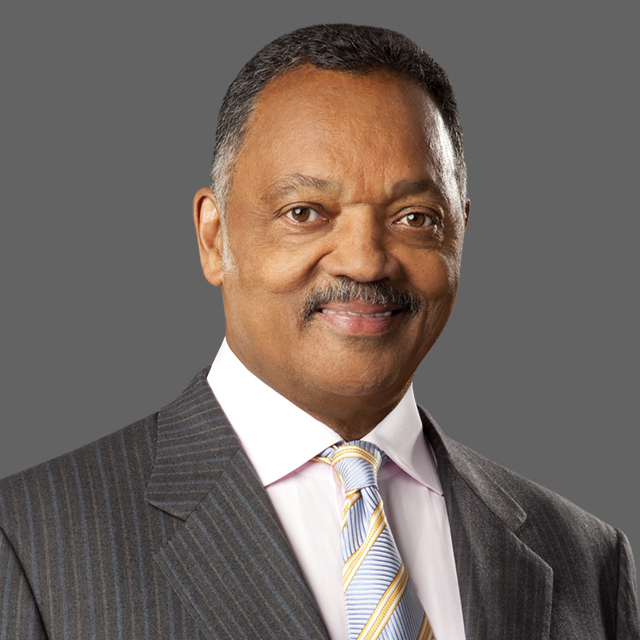
Congressional Black Caucus Reaffirms and Honors the Enduring Legacy of Reverend Jesse L. Jackson, Sr.

FOR IMMEDIATE RELEASE

February 23, 2026


Today, Congressional Black Caucus Chair Yvette D. Clarke (NY-09), First Vice Chair Troy Carter (LA-02), and members of the Congressional Black Caucus issued the following statement:


As the nation continues to reflect on the life and legacy of Reverend Jesse L. Jackson, Sr., the Congressional Black Caucus reaffirms our deep gratitude for his extraordinary contributions to American democracy and global human rights. His impact cannot be confined to a single moment of remembrance; it demands continued recognition and renewed commitment to the ideals he advanced.


For more than half a century, Reverend Jackson stood on the front lines of the movement for justice, equality, and human dignity. From marching alongside Dr. Martin Luther King Jr. during the Civil Rights Movement to building institutions that empowered millions, his life’s work helped move our nation closer to its founding ideals.


Through his courage, his voice, and his unwavering faith, Reverend Jackson earned a place of honor not only in history but in the hearts and minds of tens of millions of people around the world. People of every race, creed, color, faith, culture, and background found inspiration in his message that dignity belongs to us all. He spoke to the poor and the powerful, to the young and the elderly, to those in small towns and those in the largest cities. His life reminded us that justice is not reserved for some but must belong to everyone.


Reverend Jackson helped organize the Poor People’s Campaign and was present during some of the most defining moments of the civil rights era. After Dr. King’s assassination, he carried the work forward with determination, ensuring that the movement did not end but continued to grow.


Through the founding of Operation PUSH and later the Rainbow Coalition, he built one of the most influential social justice movements in modern American history. These efforts expanded economic opportunity, fought for fair employment, strengthened access to education, and gave voice to communities too often unheard.


He registered and mobilized millions of voters, helping reshape American democracy by expanding participation in the political process. His historic presidential campaigns in 1984 and 1988 broke barriers, inspired new generations of leaders, and brought millions of Americans into civic life who had never before felt seen or represented.


Reverend Jackson also carried the cause of justice beyond our borders. He helped secure the release of American hostages abroad, advocated for peace in areas of conflict, fought against apartheid in South Africa, and stood in solidarity with oppressed people across the globe. His voice for human rights was heard around the world.


At home, he championed workers, farmers, students, veterans, and families striving for opportunity. He stood with sanitation workers demanding dignity, defended family farmers facing foreclosure, advocated for greater access to education, and called for economic fairness long before those conversations reached the national stage.


His message was clear and enduring: every person matters, every voice counts, and our nation is strongest when we lift those who have too often been left behind.


“Keep Hope Alive” was not simply a phrase. It became a moral call that inspired generations to believe that progress is possible when people stand together.


Many of us serving in Congress today walk paths that Reverend Jackson helped clear. He challenged America to live up to its highest ideals, pushed leaders to act with courage, and reminded the nation that democracy works best when it works for everyone.
The Congressional Black Caucus honors his extraordinary contributions to this nation and to humanity. His life stands as a testament to faith in action, courage in the face of adversity, and an unshakable belief in the power of people coming together to build a more just society.


Reverend Jesse L. Jackson, Sr., made America better. He made the world better. And his legacy will continue to guide generations yet to come.
Artist Conversation @VMFA

Courtesy VMFA

Derrick Adams and Valerie Cassel Oliver Fri, Feb 27 | 6:30–7:30 pm 

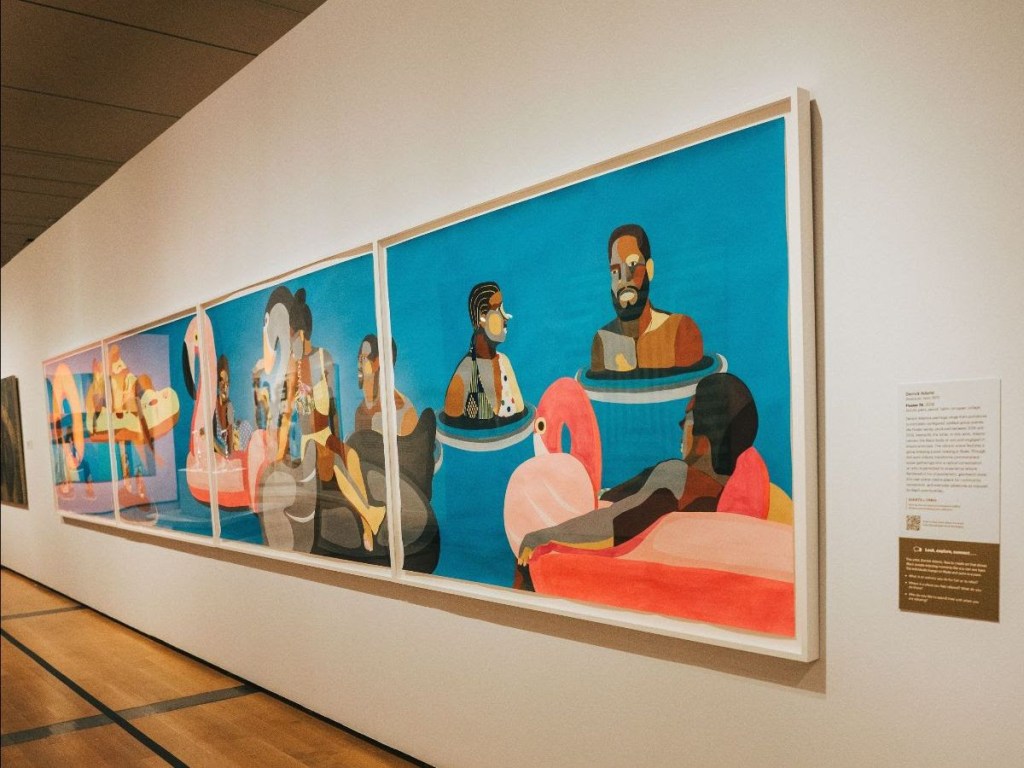
Join us for a conversation between artist Derrick Adams and VMFA’s Valerie Cassel Oliver, Sydney and Frances Lewis Family Curator of Modern and Contemporary Art. They will explore Adams’s studio practice and his determined effort to provide a creative haven for Black artists through The Last Resort Artist Retreat, his project in Baltimore, Maryland.

You can see Adams’s work at VMFA in the exhibition Giants: Art from the Dean Collection of Swizz Beatz and Alicia Keys and in the museum’s 21st-Century Galleries.

Get Tickets.

About the Artist


Derrick Adams is a multidisciplinary artist living and working in Brooklyn, New York. Adams’s work celebrates and expands the dialogue around contemporary Black life and culture through scenes of normalcy and perseverance. He has mounted public installations, commissioned through Monument Lab, in Washington DC, Chicago, and New York City. In addition to being included in notable exhibitions such as Giants: Art from the Dean Collection of Swizz Beatz and Alicia Keys, his art resides in the collections of the Brooklyn Museum, the Metropolitan Museum of Art, the Whitney Museum of American Art, and VMFA among many others. Adams has been the subject of solo exhibitions at several museums, and in 2026, a mid-career survey will open at ICA Boston on April 14.

Reclaiming Richmond’s African American Burial Grounds

A history of Richmond’s Black Churches

Courtesy VCU


Feb. 26, 2026
12:30 p.m.

Learn about the history and current work of African American churches in Richmond from Benjamin Ross, church historian of Sixth Mount Zion Baptist Church and Dr. J. Elisha Burke, program director of SACRED SPACES.

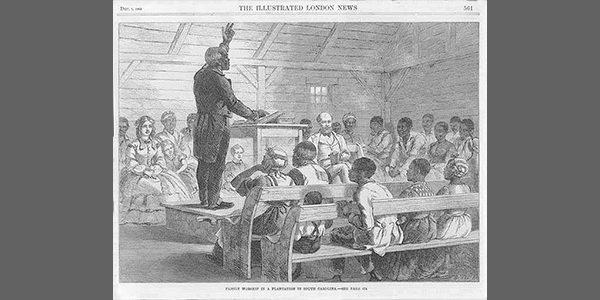
From the establishment of early pre-civil war African American churches through post-civil war and Reconstruction years, the African American church served as a hub of religious and social life. By the late 19th century and early 20th century, many churches provided assistance to aid formerly enslaved people and their families. During the civil rights movement, African American churches served as physical platforms for meetings and rallying services.

Today, African American churches continue their responsibility to care for the less fortunate and bring attention to the social injustices affecting the Black community. African American churches in Richmond remain active in social justice and civic engagement activities, specifically through the SACRED SPACES initiative which enables the Baptist General Convention of Virginia to provide training for new and current church historians.

Please register to attend to receive the Zoom link.

These Community Zooms are at a new time of 12:30 p.m., so grab some lunch and join us online!

VCU’s Community Health Hub
March 5, 2026
12:30 p.m.

The Junior League of Richmond
April 9, 2026
12:30 p.m. 

Guidelines

Prior to joining a session, attendees are encouraged to check that Zoom is working properly on their computers or devices by testing it at https://zoom.us/test.

At the start of every session, attendee’s microphones will be muted. This allows everyone to hear the organizers and presenters clearly. Attendees will be invited to unmute their microphones and speak at different times during the session.

If you have questions or comments while others are speaking, you can type them in the chat.

As at physical events, attendees are asked to help make sessions inclusive of all participants by using respectful language and allowing others to speak, even if they disagree with viewpoints being expressed.

VCU Libraries reserves the right to remove attendees from sessions for disruptive behavior.

For special accommodations, or to register offline, please contact Ryan Larson, event manager, rbpander@vcu.edu or 804-828-0593.