Honoring Women’s History Month: Celebrating 10 Years of WISER with Founder Dr. Rhonda Vonshay Sharpe
By Bonnie Newman Davis
Executive Director
BND Institute of Media and Culture
I was pleased to spend the first Saturday of Women’s History Month in the company of Dr. Rhonda Vonshay Sharpe who, along with family, friends and supporters, celebrated the 10th anniversary of W.I.S.E.R. (Women’s Institute for Science, Equity and Race). This joyous event took place March 7 at Virginia Crossings in Henrico County, Virginia.
Founded on International Women’s Day 2016, WISER is a nonprofit, nonpartisan 501(c)3 research institute. Its mission is to expand women-focused policy research to include the social, economic, cultural, and political well-being of Asian, Black, Hispanic, Indigenous American, and Multiracial women.
During this empowering celebration of acknowledgment and recognition, I learned even more about building and sustaining a nonprofit organization, the importance of staying focused and true to one’s mission, and being unafraid to lean on your board and others in times of need.
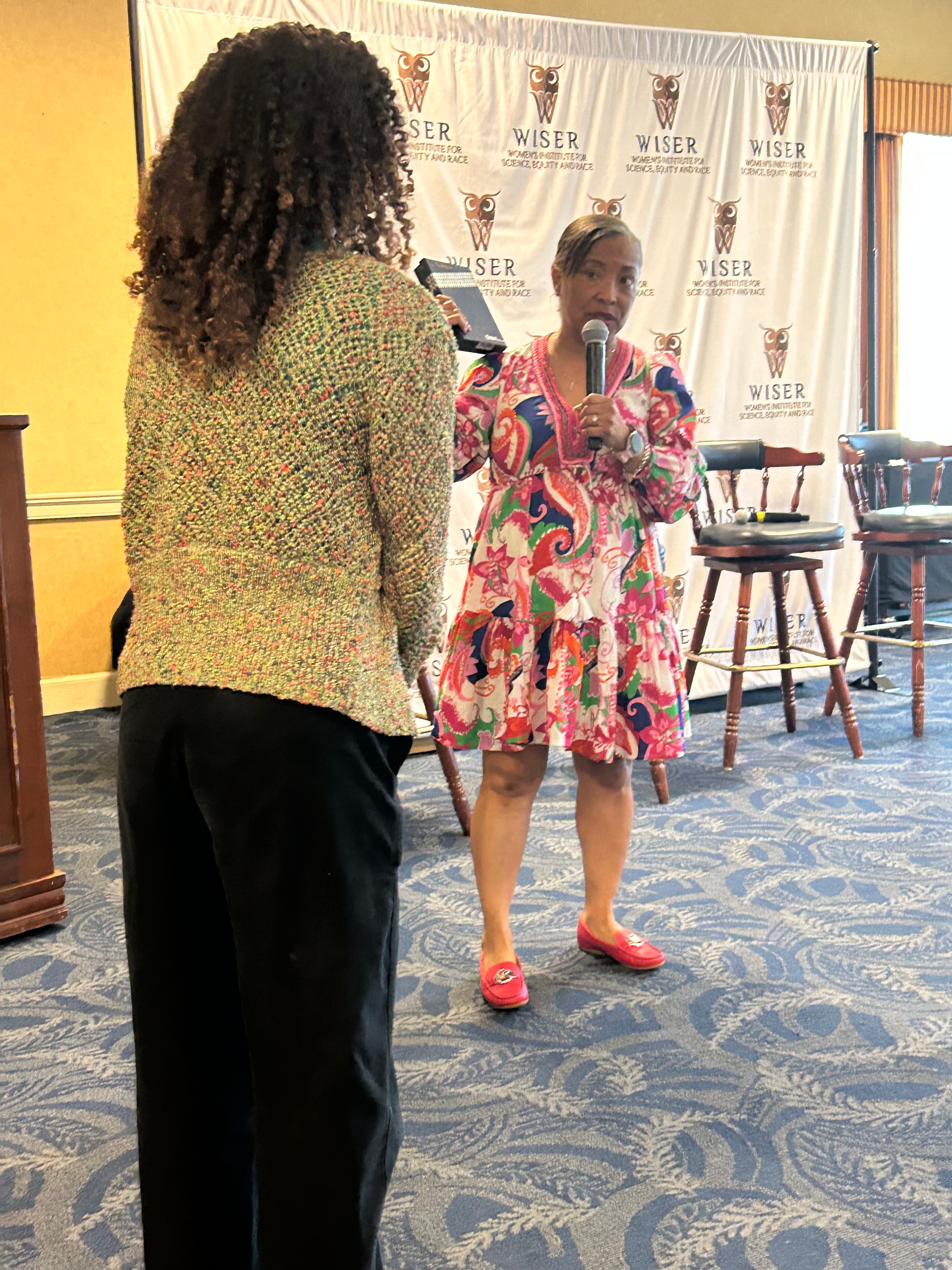
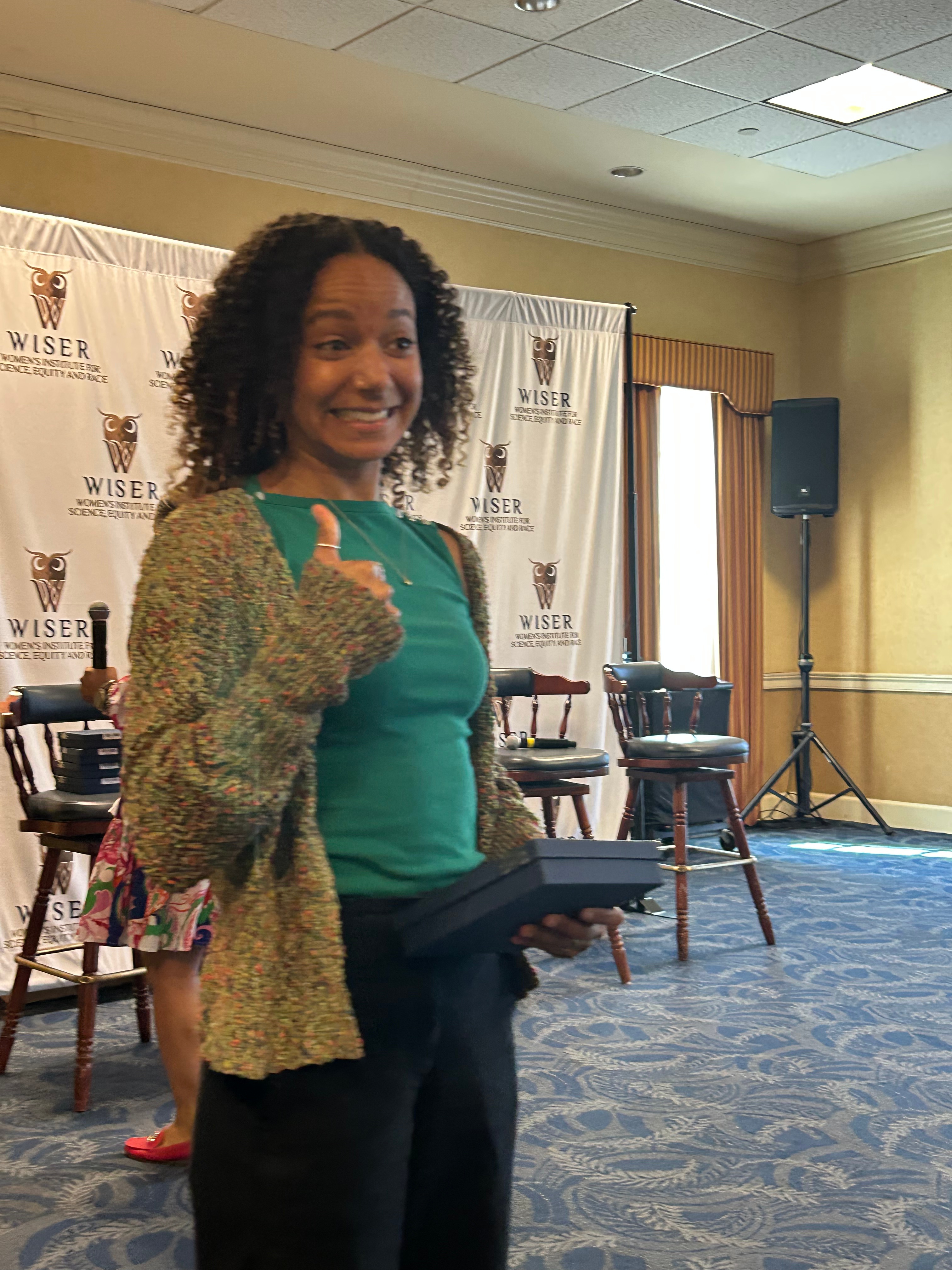
Backstory: I met Rhonda Vonshay Sharpe, Ph.D, after we were introduced about 12 years ago by a mutual friend, journalist Tamara Y. Jeffries. I was teaching at N.C. A&T State University at the time, and Tamara and Rhonda were teaching at nearby Bennett College. Tamara, one of those women who can do everything at once, was also teaching a yoga class and that’s where I first met Rhonda.
After I returned to Richmond, I started my own nonprofit 10 years ago in 2016. Meanwhile, Rhonda had also returned to Richmond and, during lunch at a restaurant in Henrico County, she told me about her own nonprofit and talked about math and economics and data sheets and lots of other stuff that I didn’t understand. (I’m a journalist, remember.)
My blinking and nodding didn’t deter her. What we had in common was Tamara, a highly revered former editor for Essence magazine and other publications, and Richmond, Va. (Rhonda grew up in Richmond; I moved to Richmond so many years ago that you can say I grew up here, too.)
Another commonality we shared was having lived in and taught at various colleges and universities in North Carolina, a thirst for ingesting information and a desire to see others benefit from our discoveries.
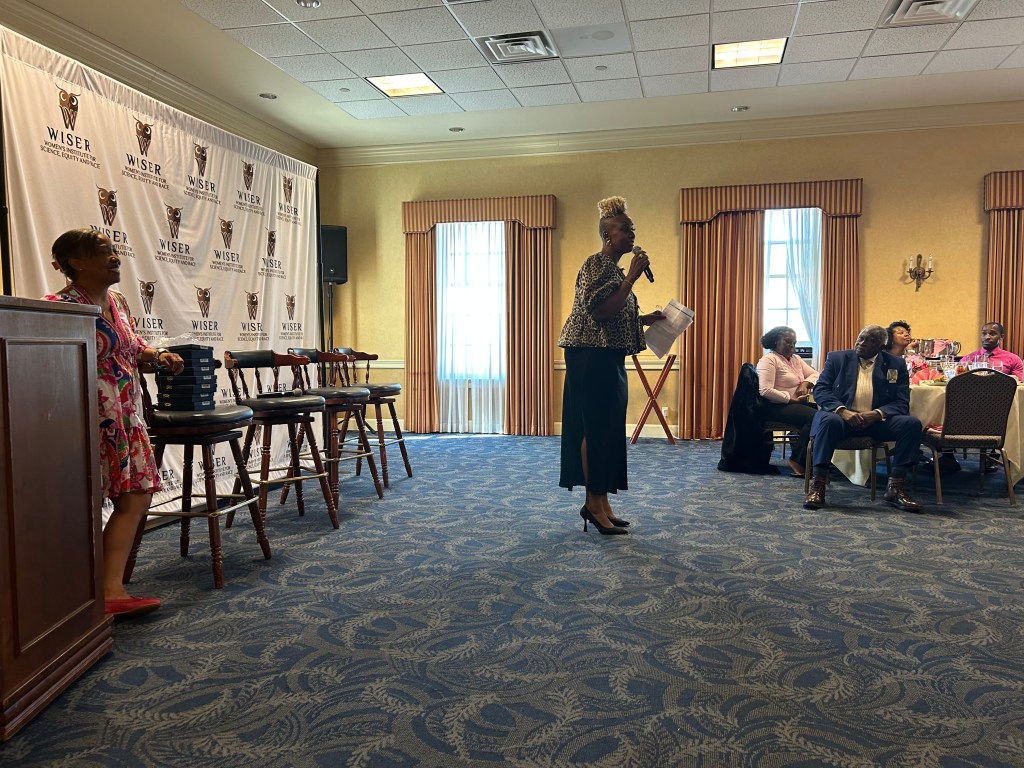
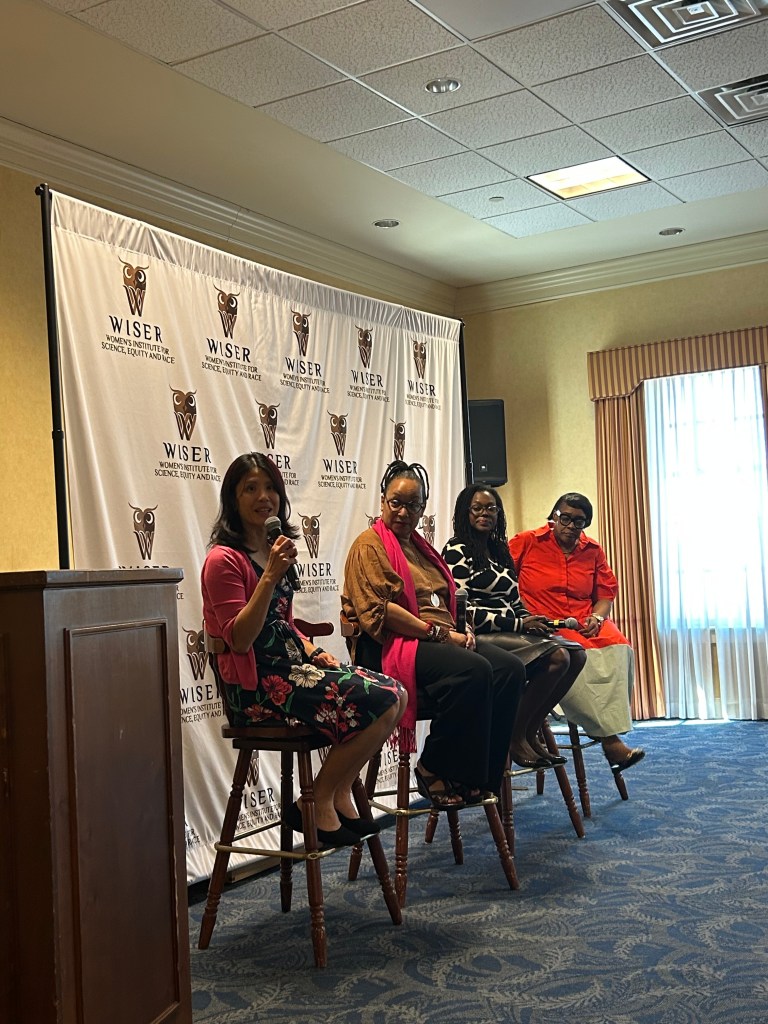
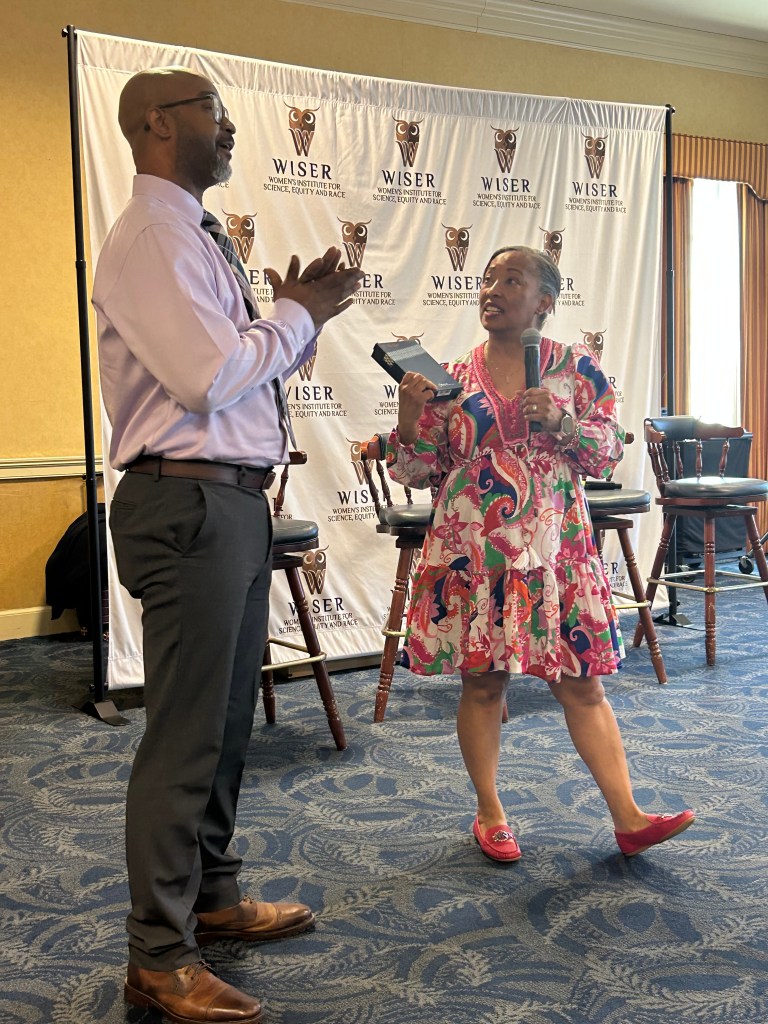
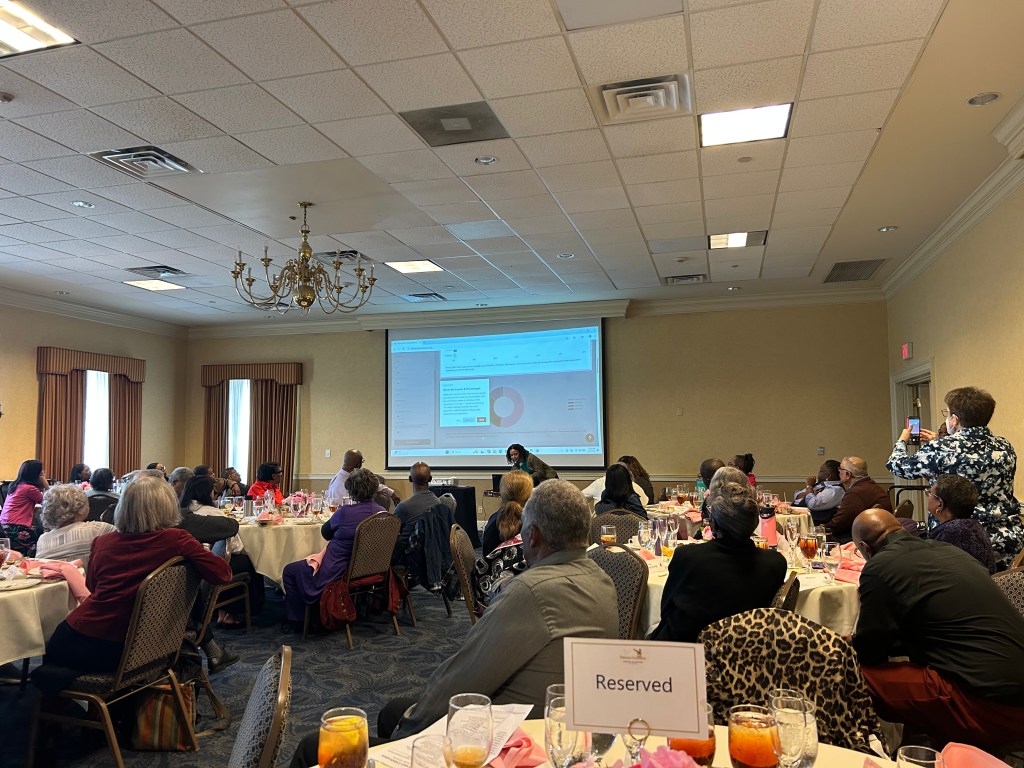
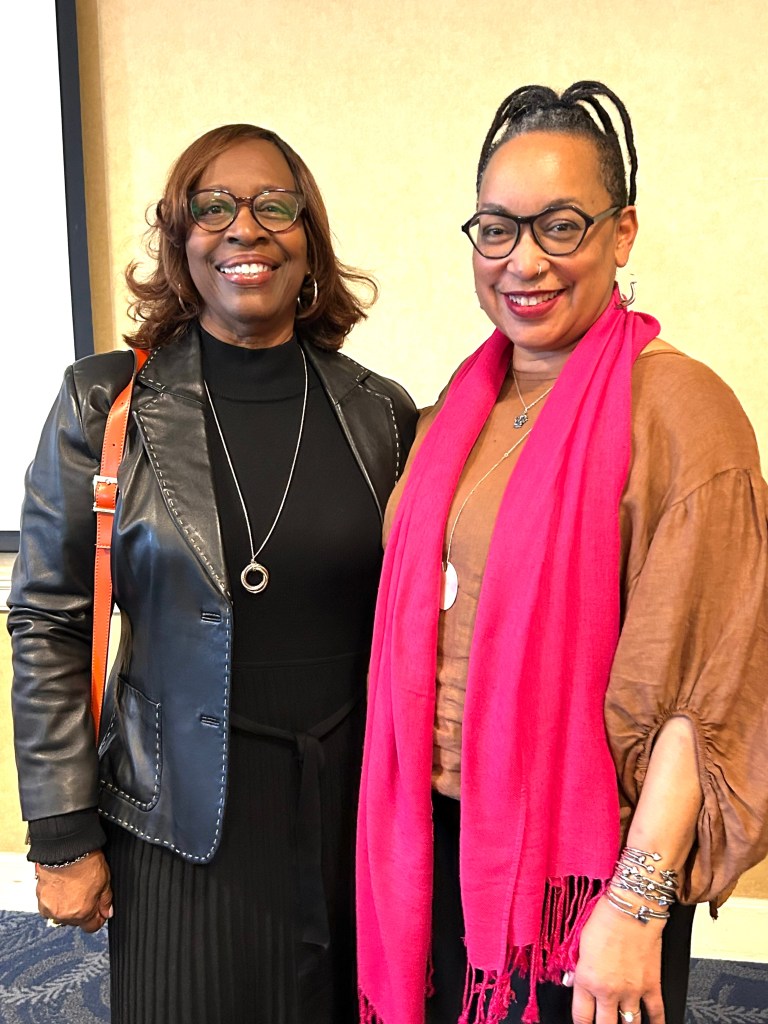
Numerous accolades were given to Dr. Sharpe that first Saturday in March, including these words spoken by her mistress of ceremonies Janice Johnson Dias, Ph.D, GrassROOTS Community Foundation & Associate Prof. of Sociology, John Jay College of Criminal Justice.
“So, Rhonda, over the past 10 years— and likely the 10 years before that — has been that woman who is driven by a vision for equity. It is clear that no matter how you get to know her, no matter whether or not you think of her as ‘stubborn’ or just simply a person of virtue and stature, is that she has a clear point of view, and that point of view is one that is driven by the idea that all of us deserves to be seen. And this enterprise that is WISER tells the story of the fact that women need to be seen.”
I encourage you to follow WISER and reach out to Dr. Rhonda Sharpe as she continues to grow and expand this much-needed institution.
Child Care Advocates Mark Equal Pay Day with Calls for Just Wages for Providers
WASHINGTON — On Equal Pay Day, child care advocates demand fair wages for women child care educators—who comprise the majority of the field’s workforce. They are highlighting how low pay and limited support are driving workers out of the profession, creating a crisis that affects children, families and economies.
This year, Equal Pay Day falls on March 26, one day later than in 2025. Black Women’s Equal Pay Day, Latina Equal Pay Day and others occur months later. About 94% of child care providers are women, with Black, Latina and immigrant women overrepresented in the under-resourced sector. Child care advocates say it is imperative to acknowledge and work to close disparities gaps.
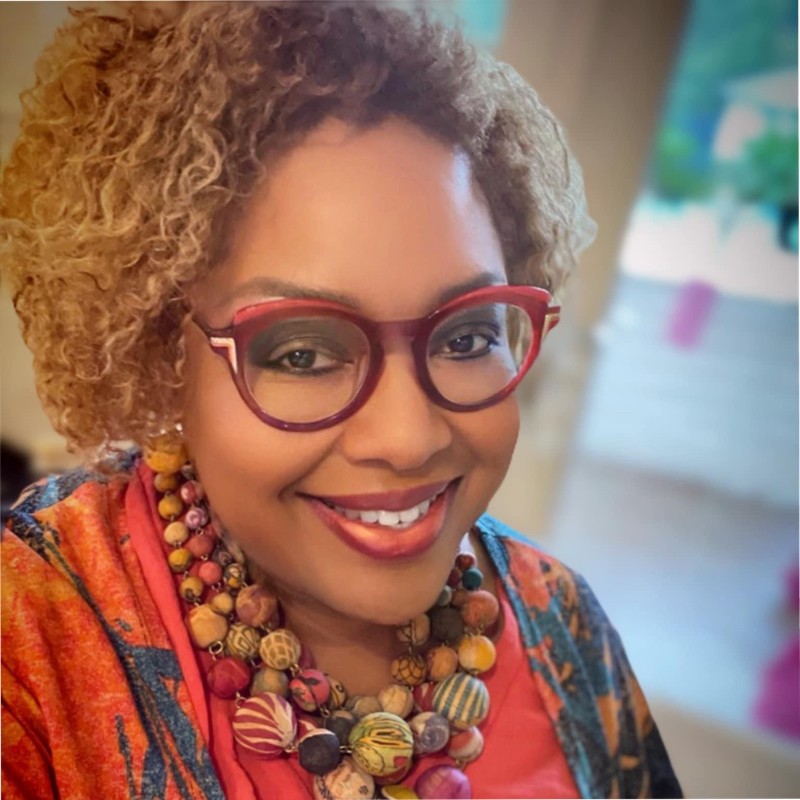
“The pay gap is still increasing, and we must take action now to eliminate it,” said Lenice Emanuel, executive director of the Alabama Institute for Social Justice. “Women in the child care system, particularly Black and Brown women, have long been underpaid and undervalued. We demand that our leaders listen to them and properly resource providers.”
“Equal pay is a women’s issue, but it’s also a family issue and an economic issue,” said Jasmine Bowles, executive state director of 9to5 Georgia. “When providers are paid unjust wages, children suffer, families face instability and programs fight to stay open. Fair wages make it possible for parents to participate in the workforce and for educators to care for themselves as well as others.”
Mary Ignatius, executive director of Parent Voices CA, is reminding everyone to honor the dignity in this work. “When you value child care, you value women, families and the economy,” she said. “This Equal Pay Day, we urge leaders to invest in child care and providers. The women who keep our businesses, families and communities running deserve fair pay and respect for their essential role.”
“Equal Pay Day must center Black and Brown women, whose labor has long been undervalued and underpaid, because when they are paid less, families lose income and entire communities lose opportunity,” said LaDon Love, executive director of SPACEs in Action.
“You can’t ride a Universal Child Care program on the backs of low-wage educators, so we fought for and won a $60 million appropriation for our early educator wage and career ladder,” said Olga Grays, an OLÉ leader and child care owner in Las Cruces, New Mexico. “Now we will work to ensure the Administration fully implements the ladder this year and uses the $60 million to raise the wages of as many educators as possible through the ladder.”
SPACEs in Action to Join Coalition Leading Day Without Child Care
WASHINGTON — On March 18 from 9 a.m. to 10 a.m., SPACEs in Action will join a Day Without Child Care rally in front of the John Wilson Building. The event will highlight the essential role of child care in sustaining communities and economies, aiming to show the impact that losing child care would have and encourage increased funding.
“Child Care is the backbone of our communities, families, and economy,” said LaDon Love, executive director of SPACEs in Action. “Without adequate funding and support, the ripple effects will harm everyone. Mayor Bowser and the D.C. Council must prioritize early childhood education in the budget.”
SPACEs in Action is leading this event alongside coalition members Under 3 DC, Jews United for Justice (JUFJ) and DC Association for the Education of Young Children (DCAEYC). They will be joined by local parents and child care providers, and will bring attendees inside the Wilson Building for a Walkaround following the rally.
If you are interested in attending or connecting with a leader at SPACEs in Action, please contact press@spotlightpr.org.
WHO: SPACEs in Action
Parents and child care providers
WHAT: Coalition Day Without Child Care Rally
WHEN: Wednesday, March 18, 2026, from 9:00 a.m. to 10:00 a.m.
WHERE: John Wilson Building,
1350 Pennsylvania Ave NW, Washington, DC 20004
Thomas Jefferson’s Monticello to Present
Pen to Paper: The Civic Gospel of the Declaration of Independence
A celebration of the Declaration of Independence, presented in partnership with the Virginia American Revolution 250 Commission (VA250)

Media Contacts:
Monticello: Jenn Lyon, Director of Marketing & Communications, jlyon@monticello.org
VA250: Erin Bagnell, ebagnell@hodgespart.com
FOR IMMEDIATE RELEASE:
CHARLOTTESVILLE, VA – Thomas Jefferson’s Monticello will present Pen to Paper: The Civic Gospel of the Declaration of Independence on Saturday, May 2, 2026, on Monticello’s West Lawn. The program commemorates the 250th anniversary of the Declaration of Independence and is presented in partnership with Virginia’s American Revolution 250 Commission (VA250), the Commonwealth’s official commission charged with leading Virginia’s commemoration of America’s 250th anniversary.
As part of VA250’s statewide initiative, America. Made in Virginia., the event underscores Virginia’s foundational role in the creation of the United States and the enduring global influence of the Declaration of Independence—drafted by Thomas Jefferson in 1776—on democratic movements around the world.
Pen to Paper will bring together voices from across American public life for an immersive program of conversation, music, and poetry exploring the language, legacy, and continuing relevance of the Declaration. The event invites visitors and community members to engage with the document not only as a historic text, but as a living statement of the ideals of liberty, equality, and self-government that continue to shape civic life.
“Pen to Paper will explore both the historical significance and the continuing promise of the Declaration of Independence as a catalyst for civic renewal,” said Dr. Jane Kamensky, President and CEO of Thomas Jefferson’s Monticello. “As we commemorate 250 years since its drafting, we are honored to host a gathering that encourages thoughtful dialogue, artistic interpretation, and community engagement around one of the most consequential documents in human history.”
“The Declaration of Independence is not only a defining American document—it is a statement of enduring ideals,” said Carly Fiorina, Honorary Chair of VA250. “As we approach America’s 250th anniversary, Virginia has a unique responsibility to lead in telling the full story of our founding—its aspirations, its contradictions, and its continuing call to civic engagement. Through events like Pen to Paper, we invite citizens to reflect on the ideas that were made in Virginia and continue to shape the nation.”
The afternoon program will feature a shared reading of the Declaration of Independence, remarks from Dr. Kamensky, Fiorina, and Ted Gioia, Program & Development Director of Arion Press, and musical performances by acclaimed Virginia musician Horace Scruggs. A poetry reading by former Virginia Poet Laureate Tim Seibles will also be included.
The event marks the launch of DECLARE: A Civic Gospel, a collaboration between Thomas Jefferson’s Monticello and Arion Press of San Francisco that centers the Declaration’s text and legacy in creative and interpretive expression. Declare: A Civic Gospel will be available as a trade paperback in May 2026. A fine press edition of the book, limited to 250 copies and with accompanying artwork, can be pre-ordered through the Arion Press website. A panel discussion moderated by Dr. Kamensky will feature Maggie Blackhawk (Fond du Lac Band of Lake Superior Ojibwe), professor at NYU and prize-winning scholar; Dr. Andrew Davenport, Monticello’s Vice President of Research; Chipp Kidd, graphic designer and writer; George Packer, staff writer for The Atlantic and novelist; and Tré Seals, founder of Vocal Type. Together, participants will explore the Declaration’s language and its evolving and contested meanings 250 years after its adoption.
Following Pen to Paper, Monticello will present a performance of Howard Ginsberg’s original play Jefferson and Adams, dramatizing the remarkable 52-year friendship and rivalry between Thomas Jefferson and John Adams. The production features veteran actor-interpreter Bill Barker as Jefferson; Sam Goodyear as Adams; and Abigail Schumann as Abigail Adams.
Pen to Paper has been designated a VA250 Signature Event and is part of a series of commemorative programs taking place across the Commonwealth leading up to July 4, 2026. Under the banner America. Made in Virginia., VA250’s Signature Events highlight Virginia’s central role in the nation’s founding and foster meaningful civic dialogue about the ideals first articulated in the Declaration of Independence and their relevance today.
******
About Thomas Jefferson’s Monticello
The Thomas Jefferson Foundation was incorporated in 1923 to preserve Monticello, the home of Thomas Jefferson, in Charlottesville, Virginia. As a civic institution, Monticello seeks to increase knowledge and share the ideals Jefferson articulated in the Declaration of Independence through programming and scholarship built upon a foundation of rigorous research.
Monticello is recognized as a National Historic Landmark, a United Nations World Heritage Site, and a Site of Conscience. As a private, nonprofit organization, Monticello receives no ongoing local, state, or federal funding. Visitors and the generosity of donors make Monticello’s twofold mission of preservation and education possible. For information, visit monticello.org.
About Virginia’s American Revolution 250 Commission
Virginia’s American Revolution 250 Commission (VA250) was established by the General Assembly to be the official organizing body to commemorate Virginia’s role in the 250th anniversary of American Independence. Its mission is to educate Americans about our history, founding ideals, and system of government; engage with communities to tell a complete story; and inspire people to recommit to the values inherent in citizenship. Join us in our effort to form a “more perfect union” in the place that made it possible. Learn more at VA250.org.
This email was sent to bonnienewmandavis@gmail.com
Thomas Jefferson Foundation, Post Office Box 316, Charlottesville, Virginia 22902, USA
Unsubscribe
C-SPAN Announces 2026 StudentCam Documentary Winners
Students explore the American story through the Declaration of Independence
Awarding $100,000 in Cash Prizes to students and teachers
Pictured top left: Ben Kurian
Pictured bottom left: Helena de la Houssaye and Harper Haden
Pictured Center: Erynna Holbrook
Pictured top right: Charlotte Ligon and Kessler Dickerson
Pictured bottom right: Tanaya Safi and Juhie Parikh
WASHINGTON (March 11, 2026) — As the United States commemorates its historic 250th anniversary this year, C-SPAN today proudly announces the winners of the 2026 StudentCam documentary competition — a nationwide civic education initiative that empowers young Americans to examine the nation’s founding principles and their continuing impact. This year, nearly 4,000 students from across the country participated, with 150 cash prizes totaling $100,000 awarded to students and teachers.
In recognition of the United States’ Semiquincentennial, C-SPAN challenged middle and high school students nationwide to explore the enduring power and relevance of the Declaration of Independence by examining:
(1) its influence on a key moment from America’s 250-year history
– or –
(2) how the values stated in the foundational document touch on a contemporary issue impacting them or their communities.
Through thoughtful research, storytelling, and original filmmaking, students engaged directly with the ideals of equality, rights, liberty, and self-governance — demonstrating how the Declaration continues to shape both historic milestones and present-day debates.
The 2026 grand-prize winner is Erynna Holbrook, a student at Troy Athens High School in Troy, Michigan, where C-SPAN is available through its partner Comcast. Eryanna will receive $5,000 for the documentary, “The Pursuit of Fair Pay,” about the impact of name, image and likeness (NIL) on college sports. This documentary will air on C-SPAN’s networks on April 21 throughout the day.
In cooperation with its cable and satellite television partners, C-SPAN invited all middle and high school students to enter the documentary contest. In response, C-SPAN received over 1,800 entries from 38 states and Washington, D.C. The most popular topics addressed were:
- Themes of Equality (16%)
- Rights and Freedoms (13%)
- Immigration and Deportation (10%)
- Economy and Tariffs (9%)
- Health (8%)
“As we recognize America’s 250th anniversary, this year’s StudentCam participants masterfully documented important political as well as societal issues and key moments from our nation’s history through compelling videos that highlight the values and enduring legacy of the Declaration of Independence,” said C-SPAN’s Director of Education Relations Craig McAndrew. “Each of their prize-winning videos is sure to spark meaningful reflections among viewers across the country and inspire future generations of filmmakers. On behalf of everyone at C-SPAN, congratulations to the exceptionally gifted young people who triumphed in the 22nd annual competition!”
High school students competed on a regional level, with the United States divided into three regions: Central, East and West. Middle school students were judged on a national basis. The grand-prize winner was selected nationally among all regions and grade levels.
Ben Kurian, a student at Olentangy Liberty High School in Powell, Ohio — where C-SPAN is available through Spectrum — will receive $3,000 as a first-prize winner in the High School Central region for the documentary, “A Right to Health.” This video was also recognized as “Fan Favorite” receiving over 1,700 of more than 14,000 votes that were cast by the public between March 1 and March 8. Ben will receive an additional $500 in prize money. This documentary will air on C-SPAN’s networks on April 20 throughout the day.
Charlotte Ligon and Kessler Dickerson, students at Millbrook Magnet High School in Raleigh, North Carolina, will receive $3,000 as first-prize winners in the High School East region for the documentary, “Roots of Freedom: The Struggles and Tensions of Rural American Agriculture.” In Raleigh, C-SPAN is available through Spectrum. This documentary will air on C-SPAN’s networks on April 19 throughout the day.
Tanaya Safi and Juhie Parikh, students at Inderkum High School in Sacramento, California — where C-SPAN is available through Comcast — will receive $3,000 as first-prize winners in the High School West region for the documentary, “Dreamers Deferred: The American Dream On Hold.” This documentary will air on C-SPAN’s networks on April 18 throughout the day.
Helena de la Houssaye and Harper Haden, students at Correia Middle School in San Diego, California, are national first-prize winners in the Middle School division and will receive $3,000 for the documentary, “This Is What Democracy Looks Like,” about the influence of the Declaration of Independence on the No Kings Movement. Cox Communications makes C-SPAN available in Correia. This documentary will air on C-SPAN’s networks on April 17 throughout the day.
In addition to the grand-prize and first-prize winners, C-SPAN is awarding 16 second prizes, 32 third prizes and 97 honorable mention prizes. These winning videos will receive cash awards of $1,500, $750 and $250, respectively. The StudentCam competition has awarded over $1.7 million in prizes since 2004.
C-SPAN is primarily funded by America’s cable, satellite and streaming television companies, its partners in StudentCam. Each winning video is available to view at studentcam.org and may be used in a broadcast with attribution to C-SPAN.
The annual StudentCam competition is funded by the C-SPAN Education Foundation. Videos were evaluated by a panel of educators and C-SPAN representatives based on the thoughtful examination of the competition’s theme, quality of expression, inclusion of varying sides of the documentary’s topic and effective incorporation of C-SPAN programming.
###
C-SPAN Classroom uses the network’s programs on public affairs, coverage of Congress, nonfiction books and American history to create free digital tools for teachers, students, and the public to use in classrooms, in projects or for research. C‑SPAN Classroom’s website provides social studies teachers with access to thousands of free resources, including short current events videos, Lesson Plans and Bell Ringers, plus Constitution Clips, Classroom Deliberations, and On This Day in History events. Engage with C‑SPAN Classroom on X and Facebook.
C-SPAN, the private nonprofit public affairs media organization providing Americans with unfiltered access to government proceedings, was created in 1979 as a public service by the cable television industry and is funded through fees paid by cable, satellite television and streaming companies that provide the C-SPAN Networks to subscribers, as well as donations from individual viewers and supporters. C-SPAN connects with millions of Americans through its three commercial-free TV networks, C-SPAN Radio, C-SPAN podcasts, the C-SPAN Now app, a connected-TV streaming app C-SPAN Select, C-SPAN.org and various social media platforms. The C-SPAN Networks’ video-rich website contains nearly 305,000 hours of searchable and shareable content. Engage with C-SPAN on X, Facebook, Instagram, TikTok, Threads, and YouTube, and stay connected through weekly and daily newsletters.
CONTACTS:
Pam McGorry, Education Program Senior Specialist – 202-626-4861, pmcgorry@c-span.org
Robin Newton, Media Relations Specialist – 202-626-8910, rnewton@c-span.org
Virginia’s probe into public universities’ displacement of Black neighborhoods no longer theoretical
A Newport News task force revealed its preliminary findings in a recent meeting, the most public update yet in a process many residents have urged be more transparent
By Brandi Kellam
November 13, 2025

Members of the Newport News–Christopher Newport University Task Force sit on the front row as they listen to another member present during the group’s first public forum in November. From left: Vice Mayor Curtis Bethany III, Councilman Cleon Long, Councilman Marcellus Harris, Joni Ivey, and Regina Brayboy. (Photo by Brandi Kellam/Virginia Mercury)
Virginia’s examination of its buried history of university expansion into Black neighborhoods is entering new territory — one that may test how well research efforts translate to accountability.
A legislative commission in Richmond has spent the past year surveying nearly every public institution of higher education, finding that at least 11 cited using eminent domain or other means to acquire land in majority-Black neighborhoods. At the same time, a city–university task force in Newport News is documenting the local impact of one such case involving Christopher Newport University (CNU), sharing new details about its research into the erasure of a historic Black community.
Together, the statewide study and local inquiry illustrate how Virginia’s reckoning over displacement may unfold. At minimum, both have begun to make records and acknowledgment of these histories more public.
Early findings

The Newport News task force — formed nearly two years ago by Mayor Phillip Jones and CNU President William Kelly — held its first public forum earlier this month. Co-chairs Vice Mayor Curtis Bethany III and CNU Provost Quentin Kidd, along with four other members, outlined progress documenting property acquisitions and interviewing impacted families.
According to their presentation, researchers have identified about 130 properties tied to the university’s expansion since the 1960s and are compiling those records into a public digital map that will be housed on the Newport News Public Library’s website.
Councilman Marcellus Harris III, who grew up in the displaced neighborhood, is helping lead interviews. Harris noted eight had been completed so far, with up to 15 more planned. Members expect to release a final report in the second half of 2026, with another public meeting planned to present recommendations.

The presentation was the task force’s most detailed update to date. Previous news releases on the university’s website offered only broad language about research and outreach to the dismay of some families, local citizens, and advocates who have been urging the group to be more open with its process.
In their first on-camera, sit-down interview with the Virginia Mercury in early November, Bethany and Kidd said the cautious pace reflects a desire to ensure accuracy before releasing information publicly.
“We needed to get to a point with the actual facts so that we could provide an update that was meaningful,” Kidd said.
Task force members said much of their work has focused on understanding the scope of displacement and how best to document it. They also described that lengthy process as key to fully understanding both the history and its impact.
“Our task force refuses to issue recommendations that are performative and carry no teeth, because we know that would deepen distrust,” said member and City Councilman Cleon Long during the presentation. “We do not want to send proposed recommendations that are dead on arrival.”
The work represents uncharted territory for the group.
“There is no blueprint,” Bethany said. “We’re learning as we go.”

Homeowners seek clarity, concrete outcomes
Long before the public meeting, the task force faced calls for greater transparency about the makeup of the task force and why its meetings were closed.
Citizens raised concerns at several council meetings and community events about the lack of public access to the task force’s meetings. Letters to Mayor Phillip Jones and CNU President William Kelly urged appointing descendants or expanding citizen participation, while correspondence to the task force itself sought clearer details about its purpose.
The co-chairs said their approach — prioritizing research before engagement — was meant to build credibility, and said they remain confident in that decision despite public criticism.
“At the end of the day, you have to be confident in the work you did,” Kidd said.
Roughly 40 to 50 people attended the presentation, including current and former residents, CNU faculty and community members. Questions were collected during three separate small-group breakout discussions facilitated by the Virginia Center for Inclusive Communities. Participants said conversations centered on transparency, university expansion plans and potential forms of repair.
Melvin Byrd, who grew up on Prince Drew Road, said he would like to see the website include more transparency about how the remaining property acquisitions occurred.
“The college’s original charter was not supposed to expand beyond (that) boundary line,” he said. “They did, and the methods by which they obtained that land may or may not have been above board.”
During his session, he said two attendees suggested the university establish a fund or set-aside for descendants of displaced families. Byrd also said he hoped to see the task force make more of its property data publicly accessible.
Homeowners who still live in the neighborhood expressed desire for tangible outcomes.
“I know the history,” said Katie Luck, one of the five remaining residents. “Now I want to know Christopher Newport’s plans for our community. I’m just not getting any answers.”
The lack of answers has kept her from improving her property, Luck said.
“I had great plans for my home, but because of what’s been going on, we haven’t done anything to it except paint the shutters, put on a new roof, and screen the porch. That’s it.”

Gail Guynn, who lives in one of the five remaining homes in the community, expressed similar sentiments.
“They’ve shared their research more publicly,” she said, “but what matters more to me is how honestly they’ll talk about the harmful decisions that were made, who made them, and how those decision makers will be held accountable.” Local pastors Andrew Millard and William Blackwell Jr., who have been vocal critics of the task force’s transparency over the past year, said the update was encouraging but overdue.
“We weren’t looking for results a year ago,” Millard said. “We just wanted to know what they were doing.”
Millard said it was helpful to hear the task force is interviewing displaced families but still believes descendants should be directly represented on it. He also urged the university to be forthright about its future development.

“One thing the university needs to do is be honest about its future expansion plans — whether that 2030 plan is still on the books or not,” he said, referring to a previously reported university site plan that called for acquiring the remaining houses in the neighborhood by that time.
Blackwell said the task force’s November update was a sign of progress but urged the group to improve its communication – suggesting the website as a tool for more consistent updates
“Providing even brief highlights when full details aren’t available would help keep everyone informed and foster greater transparency,” Blackwell said.
He also emphasized the importance of direct engagement with affected families. “A decision has to be made one way or another,” he said. “Are we going to do reparations, a plaque, something to recognize the group? That should come from the people who were impacted — but if you don’t talk to them, then you’re doing it in a silo.”
While the task force did not outline a formal framework, its recent updates offered some indication of the guiding principles shaping its approach to recommendations. Members have expressed a desire to be intentional in their work and ensure it honors the community. At the November meeting, they also sought to distance themselves from the practical implementation of proposed recommendations – emphasizing the group “lacks the authority” to enact measures and operates separately from the city and university offices that could ultimately make those decisions.
At the same time, several members hold influential positions within those very institutions. Bethany and Long serve on the Newport News City Council, while Kidd and Vidal Dickerson, another task force member, hold executive-level roles at Christopher Newport University.
The path forward
Looking ahead, the local task force members said insights from the November meeting will guide the next phase of the group’s work. Updates on the task force’s progress could drop soon after the state commission’s current deadline to complete its work.
The commission’s research subcommittee is working to verify universities’ survey responses using public data and records and is seeking to hire a project coordinator to support that effort. Lawmakers approved additional funding earlier this year, bolstering the commission’s continued operation through mid-2026.
The commission’s survey responses could signal growing university collaboration in helping the legislative group document displacement histories. Of the 11 institutions that acknowledged using eminent domain or acquiring property in majority-Black neighborhoods, universities including Christopher Newport, Longwood, Old Dominion, Radford, Virginia Commonwealth, and the Virginia Military Institute confirmed such activity. Respondents also outlined the types of records available to support that history, ranging from real estate transactions and property assessments to letters and newspaper clippings related to land purchases.

In Newport News, Bethany and Kidd declined to elaborate on the outlook of the group’s final recommendations, saying they are not far enough along in their research to determine that. They did say they hope any eventual outcomes reflect the intent behind their work.
“I wouldn’t feel good if we produced a report and made recommendations that weren’t actionable,” Kidd said. “And I wouldn’t feel good if we made recommendations that were so narrowly actionable that they didn’t really seem like much.”
Bethany added that he hopes the process ultimately strengthens trust between the task force and the community and that it “feels confident in the work we’ve been able to accomplish.”
Editor’s note: This story was produced for the Virginia Mercury with support from the Education Writers Association and Columbia Journalism School’s Spencer Education Journalism Fellowship program. Reporter Brandi Kellam is a member of the 2025 EWA Fellowship cohort and 2025-2026 class of Spencer fellows.
Brandi Kellam

Brandi Kellam is an Emmy Award-winning journalist and documentary filmmaker. Her local reporting has led to the establishment of a Virginia legislative commission looking into avenues of potential redress for Black residents displaced by the state’s public universities. Additionally, her work has appeared in national outlets including ProPublica, The Chronicle of Higher Education, CBS News, NBC News, Essence, and BET. Brandi’s reporting has been recognized with several accolades, including a Gracie Award, Columbia University’s Tobenkin Prize, and the Education Writers Association’s Hechinger Grand Prize for Distinguished Education Reporting. She can be reached at brandi@brandikellam.com.
 BND Institute of Media & Culture