State Historical Marker to Be Dedicated for First Baptist Church Bermuda Hundred in Chester, Va.
—The church traces its origins to 1850 and was formally organized ca. 1866—
—Text of marker reproduced below—
PLEASE NOTE: DHR creates markers not to “honor” their subjects but rather to educate and inform the public about a person, place, or event of regional, state, or national importance. In this regard, erected markers are not memorials.
RICHMOND – The Virginia Department of Historic Resources (DHR) has announced that a state historical marker approved by the Virginia Board of Historic Resources will be dedicated in Chesterfield County for First Baptist Church Bermuda Hundred, a 19th-century church located on the site of what was the colonial-era central marketplace of Bermuda Hundred, where slave auctions were held.
The marker dedication will be held Saturday, March 28, starting at 11 a.m., outside the church, which is located at 4603 Bermuda Hundred Road in Chester (23836). Parking for attendees will be available about one quarter of a mile from the church. Attendees may use the free shuttle service to travel to the church from the guest parking area. There will also be signage beginning on Route 10 directing attendees to the church. This event is free and open to members of the public.
A dedication program will take place on the grounds of the church before the marker unveiling. The Rev. Herbert C. Townes of Chesterfield Historical Society of Virginia’s African American History Committee (AAHC) will serve as the dedication’s master of ceremonies. The Rev. Michael G. Stith, pastor at First Baptist Church Bermuda Hundred, will lead the invocation following the libation ceremony led by Richmond’s Ilu Ominira of Drums of Liberation. Among the individuals set to give remarks are Charlotte B. Wood, chair of Chesterfield Historical Society of Virginia’s AAHC; Chesterfield County Administrator Joseph P. Casey, Ph.D.; Minister Gloria Hewlett of First Baptist Church Bermuda Hundred; the Rev. Benjamin Campbell, pastor emeritus at Richmond Hill Ecumenical Retreat; the Hon. Jim Ingle of the Chesterfield County Board of Supervisors; Martha Atkinson, executive administrator at the Chesterfield Historical Society of Virginia; and Amanda Terrell, director of DHR’s Community Services Division. A celebration dance performed by Oluremi Sa-Ra will take place shortly before the marker’s unveiling.
While it was formally established in circa 1866, the origins of First Baptist Church Bermuda Hundred in present-day Chesterfield County date to 1850. The church is located at a former central marketplace of the colonial period known as Bermuda Hundred, which became one of Virginia’s official trade ports in 1691. Transatlantic slave ships brought thousands of enslaved Africans to Bermuda Hundred to be sold. After circa 1750, when the demand for laborers increased in the newly settled southern Piedmont region of Virginia, Bermuda Hundred became one of the Commonwealth’s largest slave auction sites. Most enslaved Africans who disembarked in Bermuda Hundred, including many children, were sent to tobacco plantations, where planters profited from their labor. The Rev. Curtis W. Harris, a Civil Rights leader, became pastor of First Baptist Church Bermuda Hundred in 1959.
The Virginia Board of Historic Resources, which is authorized to designate new state historical markers, approved the manufacture and installation of the historical marker for First Baptist Church Bermuda Hundred in March 2025. The manufacturing cost of the marker was covered by its sponsor, the Chesterfield Historical Society of Virginia.
Virginia’s historical highway marker program began in 1927 with installation of the first markers along U.S. Route 1. It is considered the oldest such program in the nation. Currently there are more than 2,600 state markers, mostly maintained by the Virginia Department of Transportation, except in those localities outside of VDOT’s authority.
Full Text of Marker:
First Baptist Church Bermuda Hundred
First Baptist Church Bermuda Hundred traces its origins to 1850 and was formally organized ca. 1866. The Rev. Curtis W. Harris, a Civil Rights leader, became pastor here in 1959. The church stands on the former central marketplace of Bermuda Hundred, which became one of Virginia’s official ports in 1691. Transatlantic slave ships brought thousands of enslaved Africans here to be sold. When demand for labor surged in the newly settled southern Piedmont after about 1750, this became one of Virginia’s largest slave auction sites. Most enslaved Africans who disembarked here, including many children, were marched to tobacco plantations in the interior, where planters profited from their labor.
From Rita L Ricks!
Your Heart is Listening to How You Lead
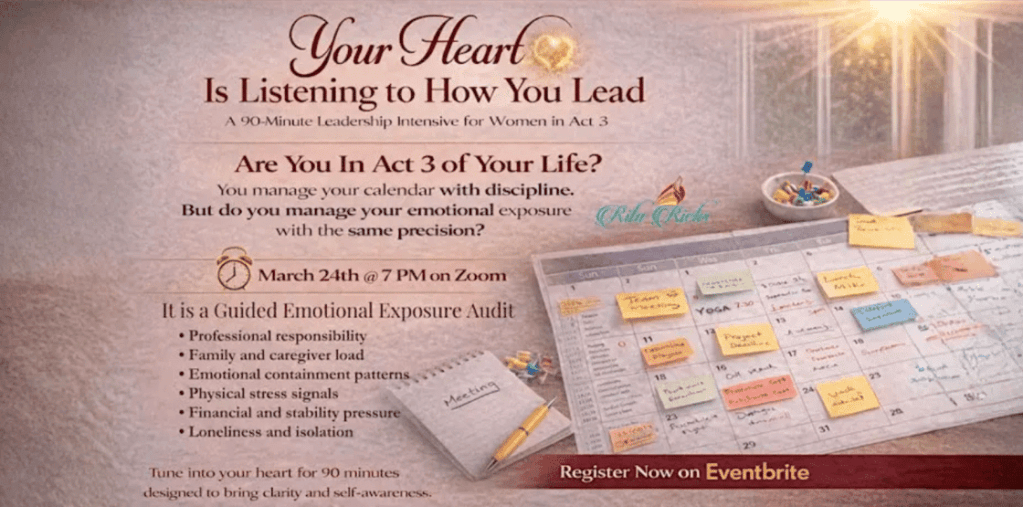
YOUR HEART IS LISTENING TO HOW YOU LEAD is a 90-minute leadership intensive for women 50+ held live on Zoom on March 24 at 7:00 PM. You manage your calendar with discipline, protect deadlines, oversee teams, and handle pressure. But after 50, something else requires the same precision: your emotional exposure. Many accomplished women are strong publicly and overextended privately. They lead organizations, care for aging parents, support children with complex needs, manage demanding bosses, tolerate disrespect, and wake at 3 a.m. thinking. They call it responsibility. The body calls it stress. This is not a basic webinar and it is not a self-care session. It is a structured, category-by-category leadership inventory to help you see clearly what you have normalized. We will move through professional load, caregiver strain, emotional containment, physical signals, financial pressure, and isolation. Each section begins with guided silence. You will write, see, and stop minimizing. Investment: $149. If you are accomplished on paper but carrying more than your nervous system should hold, this room is for you. The solution is in the silence. REGISTER.
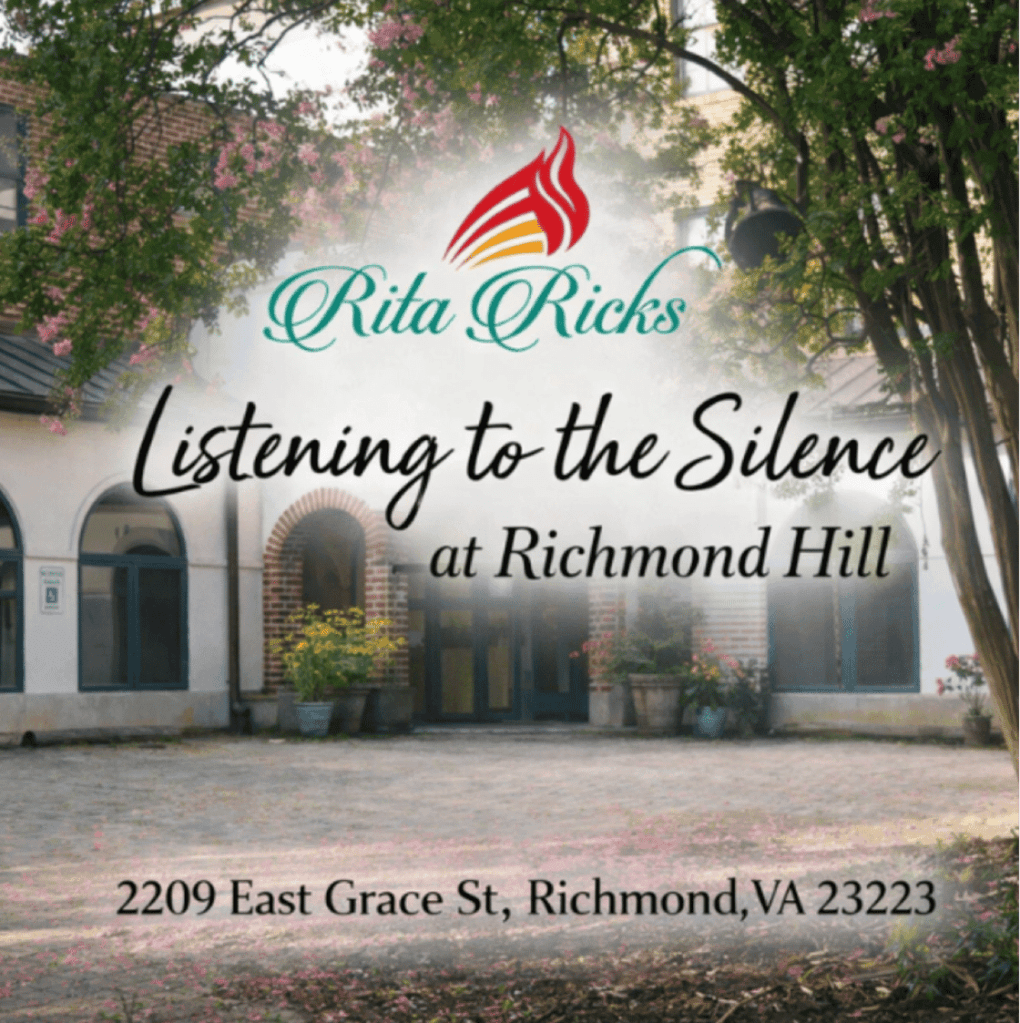
Listening to the Silence is a restorative day designed to help you quiet the noise, listen inward, and align with what matters most. This gentle, guided retreat invites you into silence, not as absence, but as presence. Throughout the day, you’ll experience an inspiring and thought-provoking opening session with Rita, nearly four hours of personal quiet reflection, a shared midday Chapel moment, a nourishing chef-prepared lunch, and space to gently re-emerge and reflect together. Please bring a journal and pen that inspire you, a light blanket or yoga mat for comfort, and a short list of four meaningful things you’d like to complete in the first six months of 2026. We will begin promptly at 9:00 a.m. Please arrive early, settle in, and be seated, ready to embrace the gift of silence. Date: March 14. Time: 9:00 a.m.–4:00 p.m. Cost: $55.00. Silence Registration!
Louisa’s Bright Hope Baptist Church earns historic recognition after community members pitched in with research
Bonnie Newman Davis/Charlottesville Tomorrow
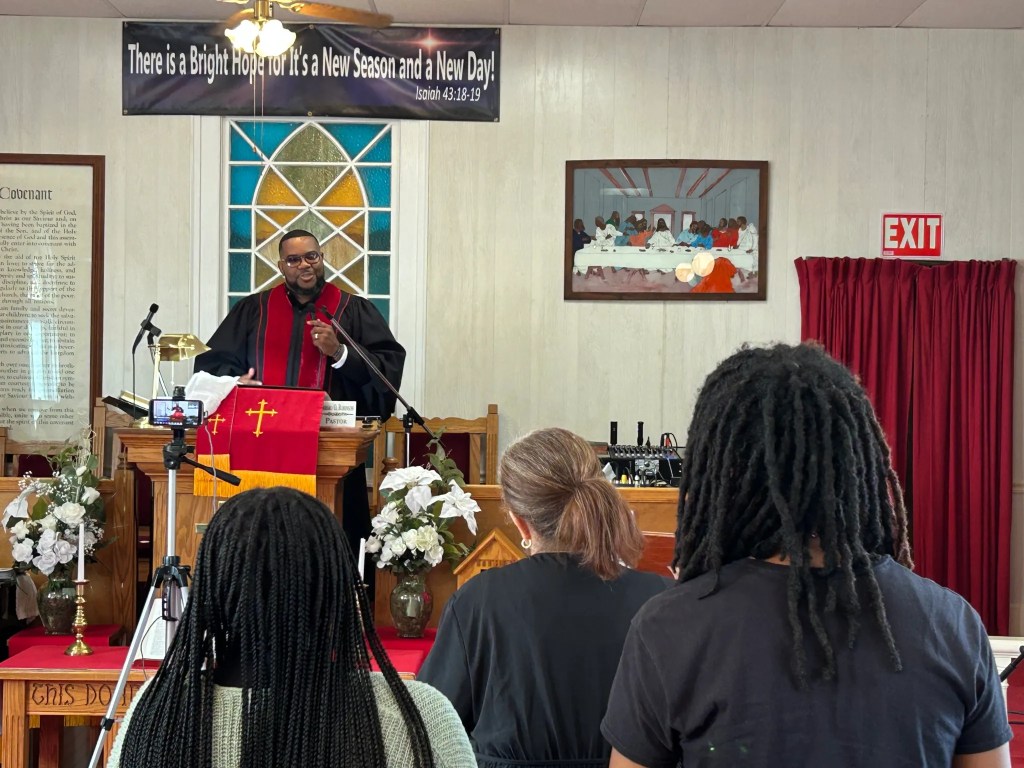
Rev. Damaro Robinson, minister of Bright Hope Baptist Church in Louisa County, delivers a sermon on Nov. 2, 2025. The church was recently approved for designation on the Virginia Landmarks Register. “It’s been a very lengthy process, and a lot of people have really worked hard for it,” said Robin Patton, a retired environmental engineer who assisted with research and helped submit the 153-page nomination. Bonnie Newman Davis/Charlottesville Tomorrow
On a crisp Sunday morning in early November, about two dozen worshippers at Bright Hope Baptist Church clapped and shouted “Amen” as Rev. Damaro Robinson reminded the congregants that by standing firm in their faith, “other doors are already open and waiting for you to come through.”
Bright Hope Baptist’s members are accustomed to their church opening its doors to the community during uncertain times. After being established in 1882 by freedmen and freedwomen in Louisa County during the Reconstruction era after the Civil War, the church soon became more than a place of worship. Historical records reflect how the white, Gothic Revival-style structure has long educated Black youth, provided holiday meals to local residents and hosted revival meetings offering prayer, preaching and songs.
On Sept. 18, Bright Hope Baptist Church and Cemetery’s legacy of leadership, cultural preservation and opening doors was recognized when the Commonwealth’s Board of Historic Resources approved it for designation on the Virginia Landmarks Register (VLR). The VLR is Virginia’s official list of places of historic, architectural, archaeological and cultural significance.
Members of the church’s congregation are elated by the news.
Lisa Aaron, Bright Hope’s secretary and Sunday service videographer, proudly noted the influence of Rev. Fountain M. Perkins, the church’s first ordained pastor who served Bright Hope after the church was established.
Before leading Bright Hope, Perkins spoke at political meetings and was considered a candidate for the Constitutional Convention of 1867–1868, the first election in which Virginia’s African American men could vote, according to the Virginia House of Delegates Clerk’s Office. In 1869, he won one of the county’s two seats in the House of Delegates. “He voted to ratify the Fourteenth and Fifteenth amendments to the U.S. Constitution, which the state was required to do before being re-admitted to the United States,” according to his biography published on the clerk’s office website.
Perkins did not run for reelection in 1871, but remained active in local politics and served as an election judge, the clerk’s office further states.
Honoring Our Elders
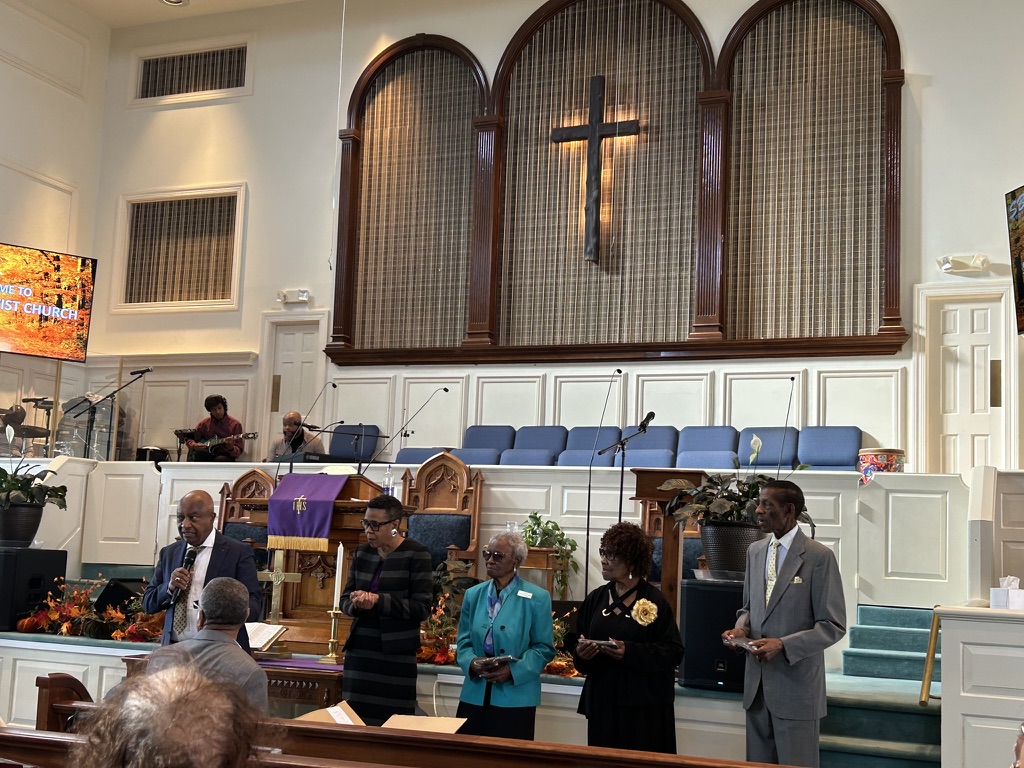
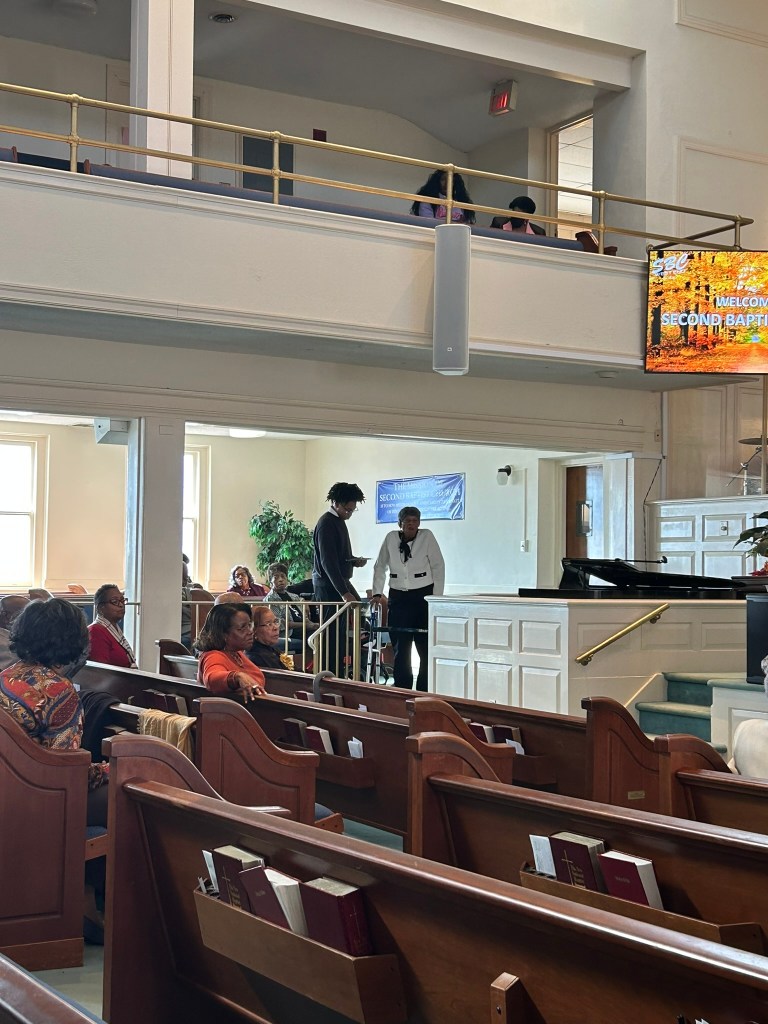
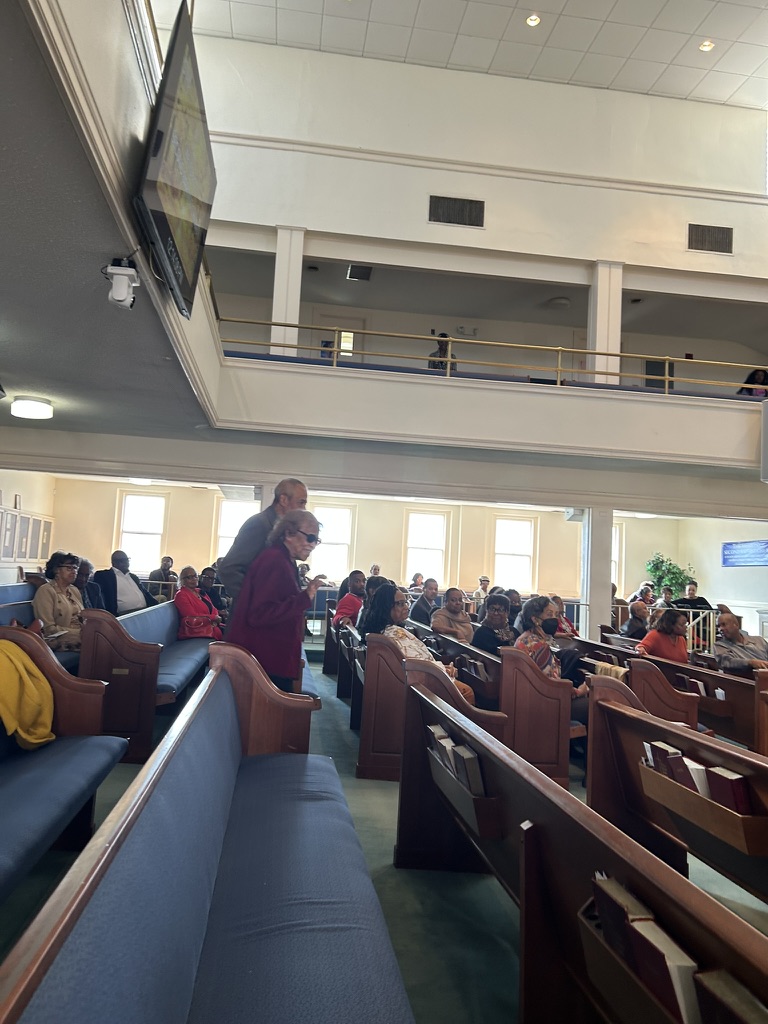
On Sunday, November 23, 2025, Second Baptist Church on Idlewood Avenue in Richmond’s west end honored its church members who are 90 years of age or older. Second Baptist is led by the Rev. Dr. James H. Henry Harris, who also is celebrating his 35th anniversary of Second Baptist. The church, one of the oldest places of worship in Richmond, VA. was established in 1842.

 BND Institute of Media & Culture