Today, Congressional Black Caucus Chair Yvette D. Clarke (NY-09), First Vice Chair Troy Carter (LA-02), and members of the Congressional Black Caucus issued the following statement:
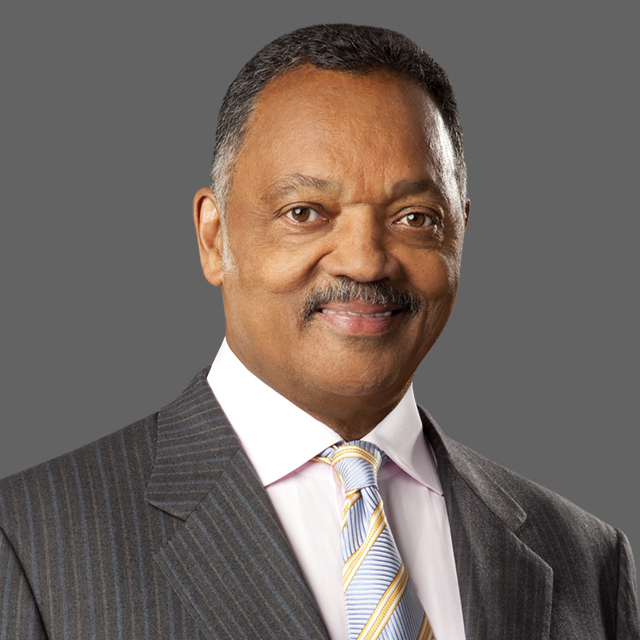
As the nation continues to reflect on the life and legacy of Reverend Jesse L. Jackson, Sr., the Congressional Black Caucus reaffirms our deep gratitude for his extraordinary contributions to American democracy and global human rights. His impact cannot be confined to a single moment of remembrance; it demands continued recognition and renewed commitment to the ideals he advanced.
For more than half a century, Reverend Jackson stood on the front lines of the movement for justice, equality, and human dignity. From marching alongside Dr. Martin Luther King Jr. during the Civil Rights Movement to building institutions that empowered millions, his life’s work helped move our nation closer to its founding ideals.
Through his courage, his voice, and his unwavering faith, Reverend Jackson earned a place of honor not only in history but in the hearts and minds of tens of millions of people around the world. People of every race, creed, color, faith, culture, and background found inspiration in his message that dignity belongs to us all. He spoke to the poor and the powerful, to the young and the elderly, to those in small towns and those in the largest cities. His life reminded us that justice is not reserved for some but must belong to everyone.
Reverend Jackson helped organize the Poor People’s Campaign and was present during some of the most defining moments of the civil rights era. After Dr. King’s assassination, he carried the work forward with determination, ensuring that the movement did not end but continued to grow.
Through the founding of Operation PUSH and later the Rainbow Coalition, he built one of the most influential social justice movements in modern American history. These efforts expanded economic opportunity, fought for fair employment, strengthened access to education, and gave voice to communities too often unheard.
He registered and mobilized millions of voters, helping reshape American democracy by expanding participation in the political process. His historic presidential campaigns in 1984 and 1988 broke barriers, inspired new generations of leaders, and brought millions of Americans into civic life who had never before felt seen or represented.
Reverend Jackson also carried the cause of justice beyond our borders. He helped secure the release of American hostages abroad, advocated for peace in areas of conflict, fought against apartheid in South Africa, and stood in solidarity with oppressed people across the globe. His voice for human rights was heard around the world.
At home, he championed workers, farmers, students, veterans, and families striving for opportunity. He stood with sanitation workers demanding dignity, defended family farmers facing foreclosure, advocated for greater access to education, and called for economic fairness long before those conversations reached the national stage.
His message was clear and enduring: every person matters, every voice counts, and our nation is strongest when we lift those who have too often been left behind.
“Keep Hope Alive” was not simply a phrase. It became a moral call that inspired generations to believe that progress is possible when people stand together.
Many of us serving in Congress today walk paths that Reverend Jackson helped clear. He challenged America to live up to its highest ideals, pushed leaders to act with courage, and reminded the nation that democracy works best when it works for everyone. The Congressional Black Caucus honors his extraordinary contributions to this nation and to humanity. His life stands as a testament to faith in action, courage in the face of adversity, and an unshakable belief in the power of people coming together to build a more just society.
Reverend Jesse L. Jackson, Sr., made America better. He made the world better. And his legacy will continue to guide generations yet to come.
Learn about the history and current work of African American churches in Richmond from Benjamin Ross, church historian of Sixth Mount Zion Baptist Church and Dr. J. Elisha Burke, program director of SACRED SPACES.
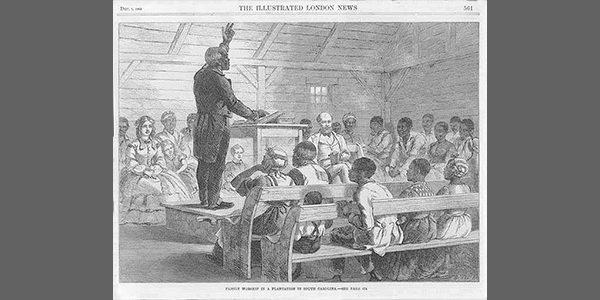
From the establishment of early pre-civil war African American churches through post-civil war and Reconstruction years, the African American church served as a hub of religious and social life. By the late 19th century and early 20th century, many churches provided assistance to aid formerly enslaved people and their families. During the civil rights movement, African American churches served as physical platforms for meetings and rallying services.
Today, African American churches continue their responsibility to care for the less fortunate and bring attention to the social injustices affecting the Black community. African American churches in Richmond remain active in social justice and civic engagement activities, specifically through the SACRED SPACES initiative which enables the Baptist General Convention of Virginia to provide training for new and current church historians.
These Community Zooms are at a new time of 12:30 p.m., so grab some lunch and join us online!
VCU’s Community Health Hub March 5, 2026 12:30 p.m.
The Junior League of Richmond April 9, 2026 12:30 p.m.
Guidelines
Prior to joining a session, attendees are encouraged to check that Zoom is working properly on their computers or devices by testing it at https://zoom.us/test.
At the start of every session, attendee’s microphones will be muted. This allows everyone to hear the organizers and presenters clearly. Attendees will be invited to unmute their microphones and speak at different times during the session.
If you have questions or comments while others are speaking, you can type them in the chat.
As at physical events, attendees are asked to help make sessions inclusive of all participants by using respectful language and allowing others to speak, even if they disagree with viewpoints being expressed.
VCU Libraries reserves the right to remove attendees from sessions for disruptive behavior.
For special accommodations, or to register offline, please contact Ryan Larson, event manager, rbpander@vcu.edu or 804-828-0593.
The Commission will meet this month to approve the statue of Barbara Rose Johns for the U.S. Capitol’s Statuary Hall Collection
The Barbara Rose Johns maquette as shown from the sides. Photo credit: Julie Langan/DHR.
RICHMOND – The Commission for Historical Statues in the United States Capitol (the Commission) will hold its twelfth public meeting on Wednesday, June 18, 2025. The meeting, which begins at 1:30 p.m., will be in the Reynolds Leadership Center on the 2nd Floor of the Virginia Museum of History & Culture, located on 428 N. Arthur Ashe Boulevard in Richmond.
At this meeting the Commission will review photographs of the completed bronze statue created by sculptor Steven Weitzman depicting the 20th-century civil rights leader Barbara Rose Johns, as well as receive an update regarding the statue’s production. After the statue has been given the final approval from the Commission, the Joint Committee on the Library, and the Architect of the Capitol, it will be installed in the United States Capitol as one of Virginia’s two contributions to the Statuary Hall Collection.
Production of the full-size Johns statue began after the Commission and the Joint Committee on the Library approved the maquette in 2023. The Johns statue will replace the statue of Robert E. Lee that was removed in December 2020. To recommend a replacement statue, the Commission had reviewed a list of names of historical figures submitted by Virginia citizens before selecting Johns from five finalists. The Joint Committee on the Library approved the Commission’s request to erect a statue of Johns in the U.S. Capitol in 2021.
The meeting agenda, as well as instructions for how to participate virtually and to register for public comment, are available on the Commission’s webpage. Though the meeting agenda includes time for verbal public comment, written comment is also welcomed and can be submitted to USCapitolCommission@dhr.virginia.gov.
For more information about Barbara Rose Johns, please visit this link.
The Department of Historic Resources, the Commonwealth’s state historic preservation office, provides administrative support to the Commission. Questions concerning the Commission, its purpose, and the upcoming meeting should be directed to the department.
RICHMOND – The Department of Historic Resources (DHR) has announced nine new historical markers coming to roadsides in Virginia. The markers will recall various topics in the Commonwealth’s history, including an important Native American trade route that was later used during military campaigns in the American Revolution and the Civil War; a 20th-century performing arts theatre in Norfolk’s Black business district that was dubbed the “Apollo of the South”; and the Rev. Dr. Martin Luther King, Jr.’s visits to communities in southern Virginia in the early 1960s, right before the height of the Civil Rights Movement.
The Virginia Board of Historic Resources approved the markers on March 20, 2025, during its quarterly meeting in Richmond hosted by DHR.
While it was formally established in 1866, the origins of First Baptist Church Bermuda Hundred in present-day Chesterfield County date to 1850. The church is located at a former central marketplace of the colonial period known as Bermuda Hundred, which became one of Virginia’s official trade ports in 1691. Transatlantic slave ships brought thousands of enslaved Africans to Bermuda Hundred to be sold. After circa 1750, when the demand for laborers increased in the newly settled southern Piedmont region of Virginia, Bermuda Hundred became one of the Commonwealth’s largest slave auction sites. Most enslaved Africans who disembarked in Bermuda Hundred, including many children, were sent to tobacco plantations, where planters profited from their labor. The Rev. Curtis W. Harris, a Civil Rights leader, became pastor of First Baptist Church Bermuda Hundred in 1959.
Two new markers highlight events that took place in Virginia during the nation’s Revolutionary and Early Republic eras:
The Old Carolina Road in Loudoun County was a Native American trade route that extended across Virginia, linking the Potomac River with the Carolinas. By the mid-1750s, the Old Carolina Road had become an important southward migration route for European settlers, who crossed the Potomac at Noland’s Ferry. The general corridor of the road corresponds to modern U.S. Route 15, though—like many colonial roads—its path often shifted. During the Revolutionary War and Civil War, the road facilitated troop movements through Loudoun County. In May 1776, Thomas Jefferson traveled on the Old Carolina Road to get to Philadelphia, where he attended the Second Continental Congress and drafted the Declaration of Independence.
American explorers Meriwether Lewis and William Clark were friends of Botetourt County native William Preston, Jr., and spent time in the county. Clark met his future wife, Julia Hancock, of Santillane, during a visit in the early 1800s. After their expedition to the Pacific Ocean from 1803 to 1806, Lewis and a group of Mandan Indians passed through Botetourt County on their way to Washington, D.C., and Clark was given a congratulatory address from citizens in the Town of Fincastle. Clark was in Botetourt County when he received his commission as a brigadier general of militia for the Louisiana Territory in 1807. He also got married in the county the following year. In 1810, the writer and future financier Nicholas Biddle met with Clark in Fincastle before editing the official narrative of the expedition.
The centrality of the Black church in Black communities of Virginia is exemplified in one new marker:
Dedicated on April 18, 1875, Moore Street Missionary Baptist Church in the City of Richmond was established to serve the residents of an area within the Sheep Hill community, later known as Carver. The Rev. William Troy, a founder of the church and its first pastor, was a freeborn man of color from Virginia. Troy became a resident of Canada before the Civil War and was a prominent abolitionist associated with the Underground Railroad. The Moore Street Industrial Institution, a school for Black students, was located on the church’s property. The acclaimed educator Virginia E. Randolph (1870-1958), who was known for her work with Henrico County’s public schools, was a member of the church. The congregation moved to its current location in Richmond in 1908.
Three approved markers focus on political and cultural events that encouraged Black people to embrace their African and African American heritage against Jim Crow and discrimination in early-20th-century Virginia:
In 1914, Marcus Garvey founded the Universal Negro Improvement Association (UNIA), an organization that promoted Pan-Africanism, Black economic independence, and racial pride and separatism. In 1918, the UNIA’s sixth division, or branch, was established in the City of Newport News. The UNIA eventually expanded to hundreds of divisions internationally. The branch in Newport News, where Garvey’s message resonated with maritime and industrial laborers, was among the largest divisions. Garvey spoke at the Dixie Theatre and at First Baptist Church in the city in 1919 to raise funds for the UNIA’s steamship company, the Black Star Line. Audience members were among the earliest and most enthusiastic investors. The UNIA was in decline by the 1930s.
Nicknamed the “Apollo of the South,” the Attucks Theatre was built in 1919 in the City of Norfolk’s thriving Black business district. Designed by Black architect Harvey Johnson, the Attucks Theatre was financed, constructed, and operated by African Americans. It was named for Crispus Attucks, who was regarded as the first casualty of the American Revolution. Known as the Booker T. from 1934 until it closed in 1955, the theatre was a venue for concerts, movies, plays, and community events, and was listed in the Green Book, a 20th-century guide for Black travelers. Artists who performed at the theatre included Ruth Brown, Ella Fitzgerald, and Dizzy Gillespie. The theatre’s rooms upstairs served as offices for Black professionals. Attucks reopened in 2004 after renovations.
On October 24, 1925, Upsilon Omega became Richmond’s first chapter of Alpha Kappa Alpha (AKA) Sorority, Inc., the first Greek-letter organization founded by Black women. Aligning with the sorority’s principles of scholarship, leadership, and service, this graduate chapter focused on supporting students in public schools. The chapter’s inaugural president was Dr. Zenobia Gilpin, a Black female physician during Virginia’s Jim Crow era who organized clinics in Black churches that were emulated elsewhere and who overcame racial inequities in the healthcare industry. Members of the chapter also included Janet Ballard, international president of AKA, and Dr. Grace Pleasants, the first Black national program director of the Girl Scouts of the USA. The chapter began to meet at Fifth Baptist Church in the 1980s.
The Board also approved two markers that recall the Civil Rights Movement in Virginia in the 1950s and ‘60s:
In Lancaster County, Brookvale High School opened to serve Black students in 1959, five years following the U.S. Supreme Court’s decision in Brown v. Board of Education declaring public school segregation unconstitutional. Brookvale replaced A. T. Wright High School, and the Crusaders Political and Social Club, a civil rights organization, met in the school building frequently. In 1969, the Brookvale Warriors won the last state baseball championship overseen by the Virginia Interscholastic Association, the league for Black schools. The county fully desegregated its schools in the fall of 1969. After that, the Brookvale building became an intermediate school. Brookvale’s last principal, Dr. Elton Smith, later became Virginia’s first Black public school superintendent.
On March 28, 1962, during a “People to People” tour of communities in southern Virginia, the Rev. Dr. Martin Luther King, Jr., spoke at Mount Level Baptist Church in Dinwiddie County. King and other officials of the Southern Christian Leadership Conference also made stops between Hopewell and Lynchburg, where they addressed crowds and went door-to-door to encourage voter registration and to recruit civil rights workers. King’s visit to Mount Level was planned by his chief of staff, the Rev. Wyatt Tee Walker, who was a former pastor of the church. At Mount Level, King spoke to a full house of people about the importance of voting as a pathway to equality and justice for all. He also visited Dinwiddie County’s Rocky Branch community.
Following the Board of Historic Resources’ approval of the markers, it can take upwards of six months or more before a new marker is ready for installation. The marker’s sponsor covers the required $3,000 manufacturing expenses for a new sign.
Virginia’s historical highway marker program began in 1927 with installation of the first markers along U.S. Route 1. It is considered the oldest such program in the nation. Currently there are more than 2,600 state markers, mostly maintained by the Virginia Department of Transportation, except in those localities outside of VDOT’s authority.
Full Text of Markers:
(VDOT must approve the proposed location for each sign in its right-of-way; local public works departments must do so in jurisdictions outside VDOT’s authority.)
First Baptist Church Bermuda Hundred
First Baptist Church Bermuda Hundred traces its origins to 1850 and was formally organized ca. 1866. The Rev. Curtis W. Harris, a Civil Rights leader, became pastor here in 1959. The church stands on the former central marketplace of Bermuda Hundred, which became one of Virginia’s official ports in 1691. Transatlantic slave ships brought thousands of enslaved Africans here to be sold. When demand for labor surged in the newly settled southern Piedmont after about 1750, this became one of Virginia’s largest slave auction sites. Most enslaved Africans who disembarked here, including many children, were marched to tobacco plantations in the interior, where planters profited from their labor. Sponsor: Chesterfield Historical Society of Virginia Locality: Chesterfield County Proposed Location: 4601 Bermuda Hundred Road
Old Carolina Road A Native American trade route that traversed Virginia, linking the Potomac River with the Carolinas, passed by here. By the mid-1750s, this “Carolina Road” had become an important southward migration route for settlers of European descent, who crossed the Potomac at Noland’s Ferry 3.5 miles northeast of here. Like many other colonial roads, its path often shifted, but its general corridor corresponds to modern US Route 15. During the Revolutionary War and Civil War, the Carolina Road facilitated troop movements through this area. In May 1776, Thomas Jefferson traveled this route to Philadelphia, where he attended the Second Continental Congress and drafted the Declaration of Independence. Sponsor: Lucketts Ruritan Club Locality: Loudoun County Proposed Location: Lucketts Community Center, Lucketts Road just east of US 15
Lewis and Clark in Botetourt County Meriwether Lewis and William Clark were friends of Botetourt Co. native William Preston Jr. and spent time here. On a visit early in the 1800s, Clark met his future wife, Julia Hancock, of Santillane. After the expedition to the Pacific Ocean (1803-06), Lewis and a group of Mandan Indians passed here on their way to Washington, D.C., and Clark received a congratulatory address from the citizens of Fincastle. Clark was here when he received his commission as brigadier general of militia for the Louisiana Territory in 1807 and was married here in 1808. Nicholas Biddle, a young writer and future financier, met with Clark in Fincastle in 1810 before editing the official narrative of the expedition. Sponsor: Virginia Lewis and Clark Legacy Trail Locality: Botetourt County Proposed Location: TBD
Moore Street Missionary Baptist Church Moore Street Missionary Baptist Church, originally several blocks east of here, was dedicated on 18 April 1875 to serve an area of the Sheep Hill community later known as Carver. The Rev. William Troy, a founder of the church and its first pastor, was a freeborn man of color from Virginia who, as a resident of Canada before the Civil War, had become a prominent abolitionist associated with the Underground Railroad. On the church’s property stood the Moore Street Industrial Institution, a school for Black students. Church member Virginia E. Randolph (1870-1958) became widely known as an educational innovator through her work in Henrico County’s schools. The congregation moved here in 1908. Sponsor: Moore Street Missionary Baptist Church Locality: City of Richmond Proposed Location: 1408 W. Leigh Street
The Garvey Movement in Newport News Marcus Garvey founded the Universal Negro Improvement Association (UNIA) in 1914 and launched its sixth division, or branch, in Newport News in 1918. The UNIA, which expanded to hundreds of divisions internationally, promoted Pan-Africanism, Black economic independence, and racial pride and separatism. The branch in Newport News, where Garvey’s message resonated with maritime and industrial laborers, was among the largest. Garvey spoke near here at the Dixie Theatre and at First Baptist Church in Newport News in 1919 to raise funds for the UNIA’s Black Star Line, a steamship company. Audience members were among the earliest and most enthusiastic investors. The UNIA was in decline by the 1930s. Sponsor: City of Newport News Locality: City of Newport News Proposed Location: Intersection of 23rd Street and Jefferson Avenue
Attucks Theatre The Attucks Theatre, known as the “Apollo of the South,” was built in 1919 in Norfolk’s thriving Black business district. It was financed, constructed, and operated by African Americans and was designed by Black architect Harvey Johnson. Named for Crispus Attucks, regarded as the first casualty of the American Revolution, the theatre was a venue for concerts, movies, plays, and community events. Performers here included Ruth Brown, Ella Fitzgerald, and Dizzy Gillespie. Rooms upstairs served as offices for Black professionals. The theatre, known as the Booker T. from 1934 until it closed in 1955, was listed in the Green Book, a guide for Black travelers. It reopened in 2004 after renovations. Sponsor: City of Norfolk Locality: City of Norfolk Proposed Location: 1010 Church Street
AKA Upsilon Omega On 24 Oct. 1925, Upsilon Omega became Richmond’s first chapter of Alpha Kappa Alpha Sorority, Inc., the first Greek-letter organization founded by Black women. This graduate chapter, following the sorority’s principles of scholarship, leadership, and service, focused on supporting students in public schools. Inaugural chapter president Dr. Zenobia Gilpin battled racial inequities in health care and organized clinics in Black churches that were emulated elsewhere. Other members included Janet Ballard, international president of AKA, and Dr. Grace Pleasants, the first Black national program director of the Girl Scouts of the USA. The chapter began meeting at Fifth Baptist Church in the 1980s. Sponsor: Alpha Kappa Alpha Sorority, Inc., Upsilon Omega Chapter Locality: City of Richmond Proposed Location: 1415 W. Cary Street
Brookvale High School Lancaster Co. opened Brookvale High School to serve Black students in 1959, five years after the U.S. Supreme Court declared public school segregation unconstitutional. The building replaced the old A. T. Wright High School. The Crusaders Political and Social Club, a civil rights organization, met here frequently. In 1969 the Brookvale Warriors won the last state baseball championship overseen by the Virginia Interscholastic Association, the league for Black schools. Lancaster Co. fully desegregated its schools in the fall of 1969, and the Brookvale building became an intermediate school. Brookvale’s last principal, Dr. Elton Smith, later became the first Black public school superintendent in VA. Sponsor: Save Brookvale History Locality: Lancaster County Proposed Location: 36 Primary School Circle
Dr. King at Mount Level Baptist Church The Rev. Dr. Martin Luther King Jr. spoke at Mount Level Baptist Church on 28 March 1962 during a “People to People” tour of communities in southern Virginia. King and other officials of the Southern Christian Leadership Conference made stops between Hopewell and Lynchburg, addressing crowds and going door-to-door to encourage voter registration and to recruit civil rights workers. The Rev. Wyatt Tee Walker, King’s chief of staff and a former pastor of Mount Level, planned the visit to this church, where King spoke to a full house about the importance of voting as a pathway to equality and justice for all. King also made a stop in the Rocky Branch community of Dinwiddie County. Sponsor: Dinwiddie County Locality: Dinwiddie County Proposed Location: 14920 Courthouse Road
Contact: Ivy Tan Department of Historic Resources Marketing & Communications Manager ivy.tan@dhr.virginia.gov 804-482-6445
Michele Norris will deliver the 2025 Community MLK Celebration keynote address on January 30, 2025. An on-stage discussion with Melody Barnes, executive director of UVA’s Karsh Institute of Democracy, will follow.
January 30, 2025 at 6:00 PM
The Paramount Theater
This event is free and open to the public. Tickets are available via the Paramount Theater website here.
Michele Norris, MSNBC Senior Contributing Editor, former Washington Post columnist, former NPR “All Things Considered” host, Peabody Award-winner An award-winning journalist, New York Times bestselling author, and one of the most recognized voices in radio, Michele Norris engages audiences in candid discussion about current events, social issues, and bridging the divide in America.
From the radio airwaves of NPR to The Washington Post to her current role as MSNBC Senior Contributor, Michele Norris is one of the most trusted voices in American journalism.
For a decade, as host of National Public Radio’s longest-running program, “All Things Considered,” she captivated audiences nationwide while earning some of journalism’s highest honors. As a Washington Post Opinions Columnist, Norris sparked important dialogue on current events, social issues and the power to make change. At MSNBC she brings her compelling insights to cover current events as a Senior Contributing Editor.
Norris is also host of “Your Mama’s Kitchen,” an acclaimed podcast produced by Barack and Michelle Obama’s media company. With an incredible range of guests including actors, authors, chefs, and musicians, she explores family histories, memories, and cultures through rich conversations flowing from the simple prompt: “Tell me about your mama’s kitchen.”
On stage, Norris inspires open and honest dialogue, with memorable stories and fascinating perspectives drawn from her personal journey, investigative research, and interviews with world leaders, Nobel Laureates and influential newsmakers. She makes complex and taboo issues remarkably accessible. Audiences walk away empowered to stimulate discussion around challenging topics within their communities.
Melody Barnes, Executive Director, UVA’s Karsh Institute of Democracy As the founding executive director of the University of Virginia’s Karsh Institute of Democracy, Melody Barnes guides the organization on an action-oriented path to realizing democracy in both principle and practice.
Barnes is a dedicated public servant with more than 25 years of experience crafting public policy. She served in the administration of President Barack Obama as assistant to the president and director of the White House Domestic Policy Council. Earlier in her career, Barnes was executive vice president for policy at the Center for American Progress and chief counsel to the late Senator Ted Kennedy on the U.S. Senate Judiciary Committee. Barnes started her career in New York as an associate at Shearman & Sterling.
Barnes earned her BA from the University of North Carolina at Chapel Hill, where she graduated with honors in history, and her JD from the University of Michigan. In addition to her role at the Karsh Institute, Barnes is the J. Wilson Newman Professor of Governance at UVA’s Miller Center of Public Affairs, a distinguished fellow at UVA’s School of Law, and co-founder of the domestic-policy strategy firm MB2 Solutions. She is an inaugural recipient of the 2024-25 Chautauqua Perry Fellowship in Democracy, a member of the Council on Foreign Relations, and serves on the boards of directors of several corporate, non-profit, and philanthropic organizations.
Presented by the Division for Diversity, Equity, and Inclusion in partnership with the School of Data Science and the Karsh Institute of Democracy.
The University of Virginia is committed to providing universal access to all of our events. Please contact Shai Sawyer at skb2gj@virginia.edu to request disability-related accommodations. Examples of accommodations may include real-time captioning, ASL-English interpreting services, accessible digital copies of programs, accessible seating, and accessible parking. Advance notice is necessary to arrange for some accommodations. Please contact us at least seven days prior to the start of this event.


 BND Institute of Media & Culture