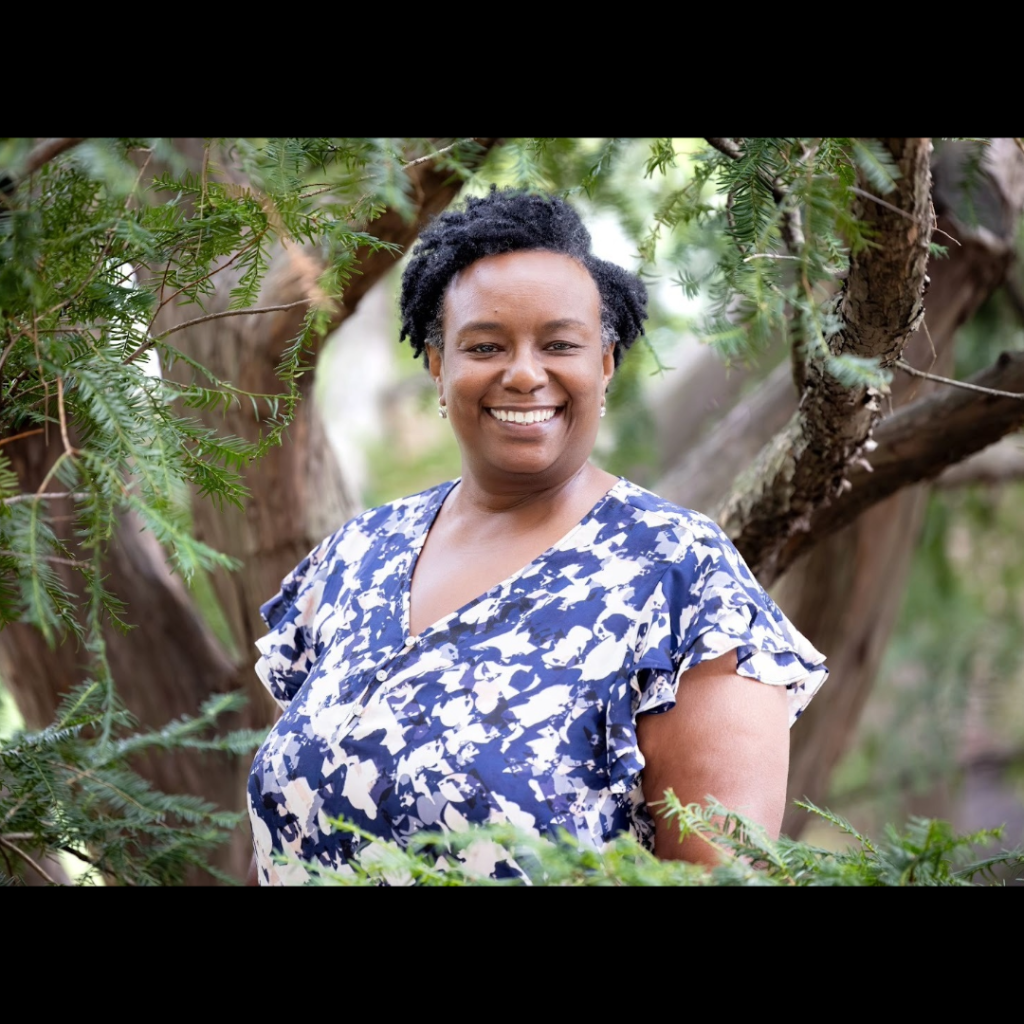
Beronda L. Montgomery, Ph.D., Virginia Commonwealth University Libraries’ 2026 Social Justice Lecturer, will discuss Gatekeeping Justice: What We Must fix to Disrupt Injustice, on Thursday Oct. 22 from 7 pm to 9 pm at the James Branch Cabell Library Lecture Hall on VCU’s campus.
Dr. Montgomery is a writer, researcher and scholar who pursues a common theme of understanding how individuals perceive, respond to and are impacted by the environments in which they exist. Specifically she will address:
* Navigating power and privilege in community and maintaining versus disrupting the status quo;
* Learning from nature (sometimes referred to as biomimicry) to solve complex problems that we face and;
* Understanding how gatekeeping impedes social justice and groundskeeping as a practice can promote system care and policies that are central to social and environmental justice.
The event, October 22, 2026 from 7 pm to 9 pm, 901 Park Ave., Richmond, VA 23284 will take place in person at James Branch Cabell Library Lecture Hall and be live streamed via Zoom. Please register to attend.
According to the American Public Health Association, “environmental justice is the idea that all people and communities have the right to live and thrive in safe, healthy environments with equal environmental protections. …Communities affected by environmental injustices are most often composed of marginalized racial/ethnic, low-wealth, rural, immigrant/refugee, indigenous and other populations that live in areas disproportionately burdened by environmental hazards, unhealthy land uses, siting of polluting industries that release toxic and hazardous waste and systemic racism, all of which drive environmental health disparities.”
The Environmental Protection Agency defines environmental justice as “the fair treatment and meaningful involvement of all people regardless of race, color, national origin, or income, with respect to the development, implementation and enforcement of environmental laws, regulations and policies.”
Environmental justice is a public health and human rights issue. Marginalized communities are disproportionately at risk of exposure to lead, air pollution, hazardous waste and extreme heat. Environmental exposures have been linked to damaging health issues, including cancer, asthma and other respiratory diseases, cardiovascular disease, neurological diseases and developmental disabilities.The threat of climate change further exacerbates these environmental health risks.
How can our community combat these injustices and work toward achieving universal, basic human rights and the safety and well-being of all residents?
About the Speaker
Beronda L. Montgomery, Ph.D., is a writer, researcher and scholar who pursues a common theme of understanding how individuals perceive, respond to and are impacted by the environments in which they exist. Her primary laboratory-based research has been focused on the responses of photosynthetic organisms (i.e., plants and cyanobacteria) to external light cues. Additionally, she pursues this theme in the context of effective mentoring and leadership of individuals, and the role of innovative leaders in supporting success.
Montgomery received her Bachelor’s Degree in Biology from Washington University in St. Louis and her Master’s Degree in Biology from University of Central Arkansas. She then went on to complete her Ph.D.in Plant Biology in 2001 at the University of California, Davis. She later became a postdoctoral fellow in Microbial Biology at Indiana University with the support of a National Science Foundation (NSF) award.
Montgomery has spent more than 20 years as a professor and academic administrator at Michigan State University and Grinnell College, serving as Vice President for Academic Affairs and Dean of the College from July 2022 through July 2024, Dr. Montgomery is a current faculty member in the Biology Department at Grinnell College.
Montgomery is author of two books When Trees Testify: Science, Wisdom, History, and America’s Black Botanical Legacy (2026, Henry Holt and Co.) and Lessons From Plants (2021, Harvard University Press).
Lessons from Plants explores how plants sense, adapt to and thrive in their surroundings. The book connects plant behavior to human life, showing how lessons in growth, community, and response to stress can guide human self-awareness, social systems, and mentorship.
This event is free and open to the public, registration is required to reserve a seat or receive the live stream link.
Registration for this event is required.
For questions or accommodations please contact Ryan Larson, event manager at 804-828-0593 or rbpander@vcu.edu.
Sponsored by Work & Think, LLC
Community Partner: BND Instiute of Media and Culture Inc.


