Some objects stop being useful before they stop having meaning.
Becoming explores what happens next.
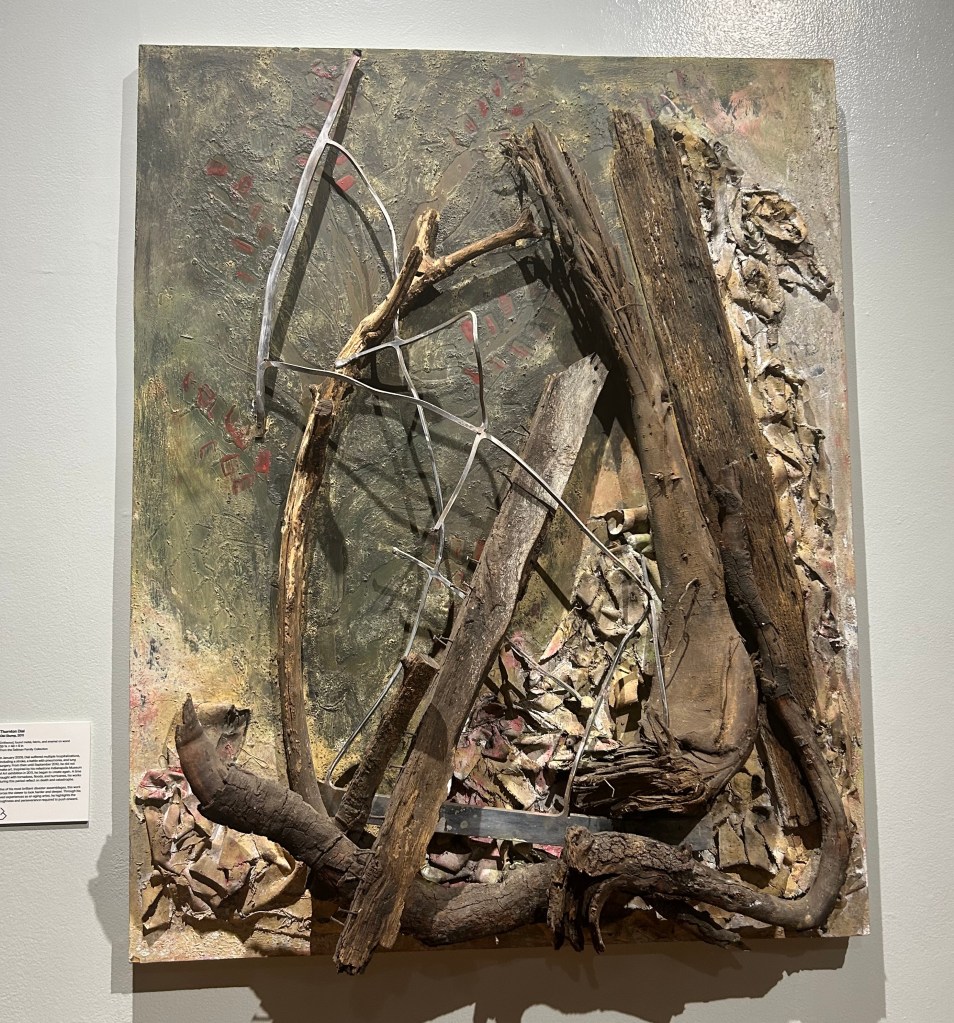
Through the work of Thornton Dial and Sanford Kogan, objects once valued for their utility are reimagined as works of art that ask us to look again. At first we recognize the object. Then we see what it can become. Together, their work suggests that nothing is ever truly finished. Every object carries a history and the possibility of becoming something new.
ABOUT THE ARTISTS
Thornton Dial is one of the most original American artists of the late 20th century. He was born into poverty and spent his life in the South, working without formal training and pulling his materials from what was around him: wire, cloth, salvaged metal, rope, carpet scraps. From those materials he built large-scale paintings and found-object sculptures, drawing on the symbolic vocabulary of the rural Black South. His work is held by the Metropolitan Museum of Art, the High, and the Smithsonian.
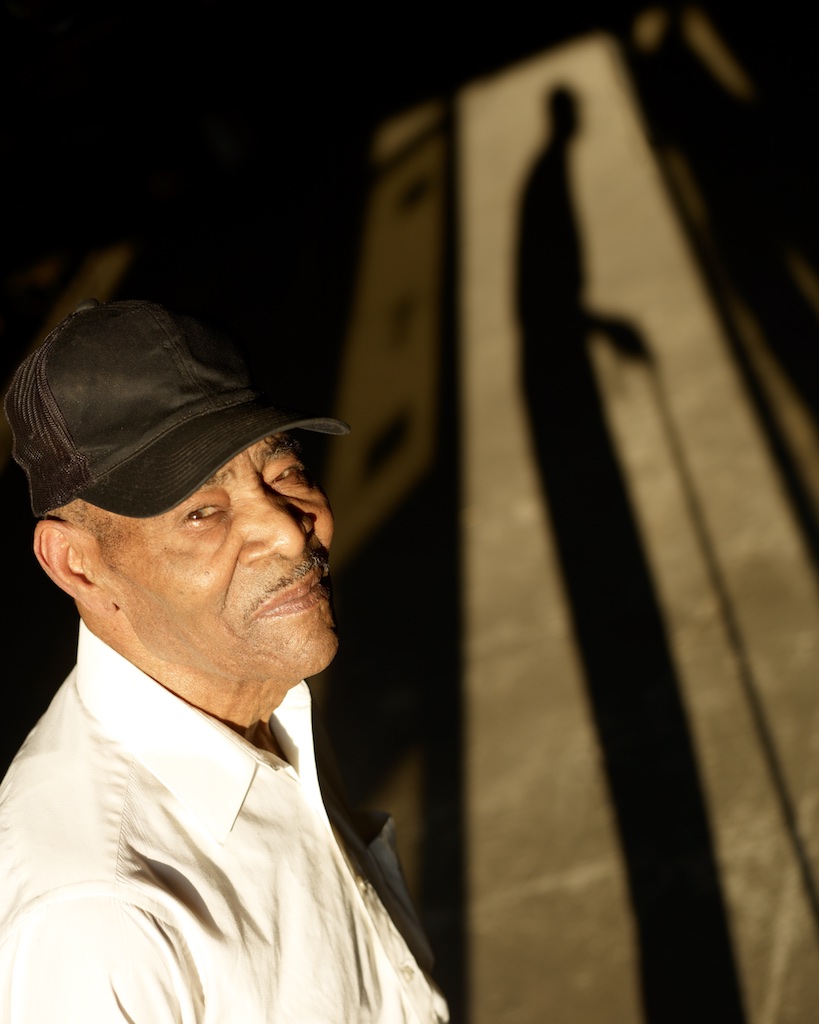
Sanford Kogan works in FroiDesign, the discipline of Found and Repurposed Objects of Industrial Design. His work centers on objects originally shaped by their utility – industrial and functional artifacts that he incorporates into sculptural compositions. Light also plays an active role. He treats light as a material, shaping it as deliberately as form and making it integral to the overall composition. His goal is to invert the original hierarchy, allowing what was once secondary to become primary, thereby revealing the quiet aesthetics of lost utility. His work has been shown in Berlin, Paris, and, more recently, Richmond, Virginia, where he now resides.
Thornton Dial
2501 Monument Avenue
Richmond, VA 23220
(804) 655-6055
frontdesk@branchmuseum.org
Hours
Tuesday–Saturday: 10:00 AM–5:00 PM
Sunday: 1:00–5:00 PM
Monday: Closed
Hours subject to change due to private rentals.
This project was supported, in part, by the Virginia Commission for the Arts, which receives support from the Virginia General Assembly. Special thanks to Crux Scenica, Worth Higgins and Virginia Union University.
Visitor Notice: Please be aware that this exhibition features moving parts, bright flashing lights, and stroboscopic effects. These elements may not be suitable for visitors with photosensitive epilepsy, sensory sensitivities, or motion sickness.
Recent history and future community-building will be the focus of VCU Libraries’ annual Black History Lecture Feb 4, 2025, “Building a Home for Change: The Obama Presidential Center.”
The Center’s Curator of Collections and Exhibitions, Dr. Crystal M. Moten, will provide an overview of the Obama Presidential Center focusing on the center’s museum exhibits. She will: explore the ways the exhibits are rooted in a larger, complex discussion about democracy; highlight the historical predecessors who made President and Mrs. Obama’s stories possible; and share the museum’s storytelling goals as they relate to the events, policies, challenges and accomplishments of the Obama Presidency. In harnessing the power of storytelling, the Center hopes to inspire all of its visitors to push for change within their own communities.
The Obama Presidential Center (OPC) will open in Chicago in spring 2026. Set in historic Jackson Park, in the heart of the city’s south side, the center spans 19 acres and will feature a fruit and vegetable garden; an athletic, programs, and events facility; a world-class museum; an auditorium; a branch of the Chicago Public Library; and more.
The Center, through its mission, museum and programs, will be a physical demonstration of how making change at home is the most meaningful way to participate in democracy and impact the world.
The speaker is a public historian, curator and writer who focuses on the intersection of race, class and gender to uncover the hidden histories of Black people in the Midwest. In 2022, Moten joined the Obama Foundation as the inaugural Curator of Collections and Exhibitions on the Presidential Center Museum team. She plays a key role in the collaborative effort to complete the design and implementation of the inaugural exhibits while also serving as the primary steward and subject matter expert of the Obama Foundation Museum Collection. Moten supervises and manages the curatorial team and its activities.
She has been researching African American life, history, culture, politics and work for nearly two decades and sees her work at the Obama Center as a “culminating moment in terms of bringing together the personal, professional, and the intellectual.”
In an online interview, Moten put the project in perspective:
“For the Obama Presidential Center, we really want people to understand that it was a collective set of actions that got President Obama to where he is today. We are telling the story and the history of President Obama becoming the nation’s first Black president. We are explaining the buildup that happened way before 2008, focusing on what led to President Obama’s historic victory, diving into the eight years of his administration, the pushback and the obstruction that happens at the end of his administration, and civic action that empowers everyone to engage in democracy.
“We want to show that together we can create the change we desire. All of our small actions added together is what moves the mountain. What history tells us is that change takes time. And I think that’s what the Presidential Center also shows. The way in which we agitate for change and the time that it takes, it’s not going to happen immediately. It didn’t happen over eight years. There’s still work to be done.”
Prior to joining the Obama Foundation, Moten served as Curator of African American History in the Division of Work and Industry at the Smithsonian National Museum of American History in Washington, DC. There, she stewarded collections as they related to the history of African Americans in business and labor; collaborated on several exhibitions; wrote for the Museum’s blog; and helped start, produce, and host “Collected,” a Smithsonian Podcast on African American History. She also reviewed and appeared on documentaries for the Smithsonian Channel including, She the People: Votes for Women.
The recipient of numerous awards and honors, Moten has taught at colleges and universities across the country including the University of Wisconsin, Milwaukee; Dickinson College; Macalester College; and American University. Her research has appeared in books, journals, documentaries and other media.
A lifetime member of the Association of Black Women Historians, she serves on the Board of Directors for the Midwestern History Association and the Labor and Working Class History Association; the Executive Committee of the Association for the Study of African American Life and History; as well as the Board of Editors for the American Historical Review.
Her most recent, award-winning book is Continually Working: Black Women, Community Intellectualism and Economic Justice in Postwar Milwaukee (Vanderbilt University Press, 2023).
She studied African American Studies and anthropology at Washington University in St. Louis and received a master’s degree in African-American Studies and a doctorate in history from the University of Wisconsin Madison.
Registration is now open. The lecture is free and open to all. Seating is limited. The lecture will be held at James Branch Cabell Library at 7 p.m. Feb. 4, 2025.
VCU Libraries’ Black History Month Lecture is supported by the Francis M. Foster Fund. [https://www.support.vcu.edu/give/fund?fund=4924] Francis Merrill Foster Sr., DDS, was an assistant professor of general-practice dentistry at Virginia Commonwealth University and a retired Richmond dentist. The unofficial historian of Jackson Ward, Foster was known for his health-care advocacy and for his desire to improve the lives of those around him.